The Borrowed Hour: On Daylight Saving and Who Pays for It
The stove clock has been blinking 12:00 since last Sunday. The car still runs an hour ahead, so the drive to school feels late and the drive home feels later. There is a wall clock in the hallway that nobody has touched since we moved in, and it is now correct by accident, which is the only kind of correct it has ever been.
We do this twice a year. An entire country, plus most of Europe, reaches for the same dials at the same hour and agrees to a change that nobody voted on this year and nobody can individually decline. Then we go to work at the hour the clock says and call the whole thing normal, because it is.
The week after the fall change is the pleasant half. Everyone got an hour. Nobody had to wake up in the dark to receive it. The bill for that hour comes in March, and it comes due all at once, on a Monday, for people who did not agree to lend it.
The clock is not the sun
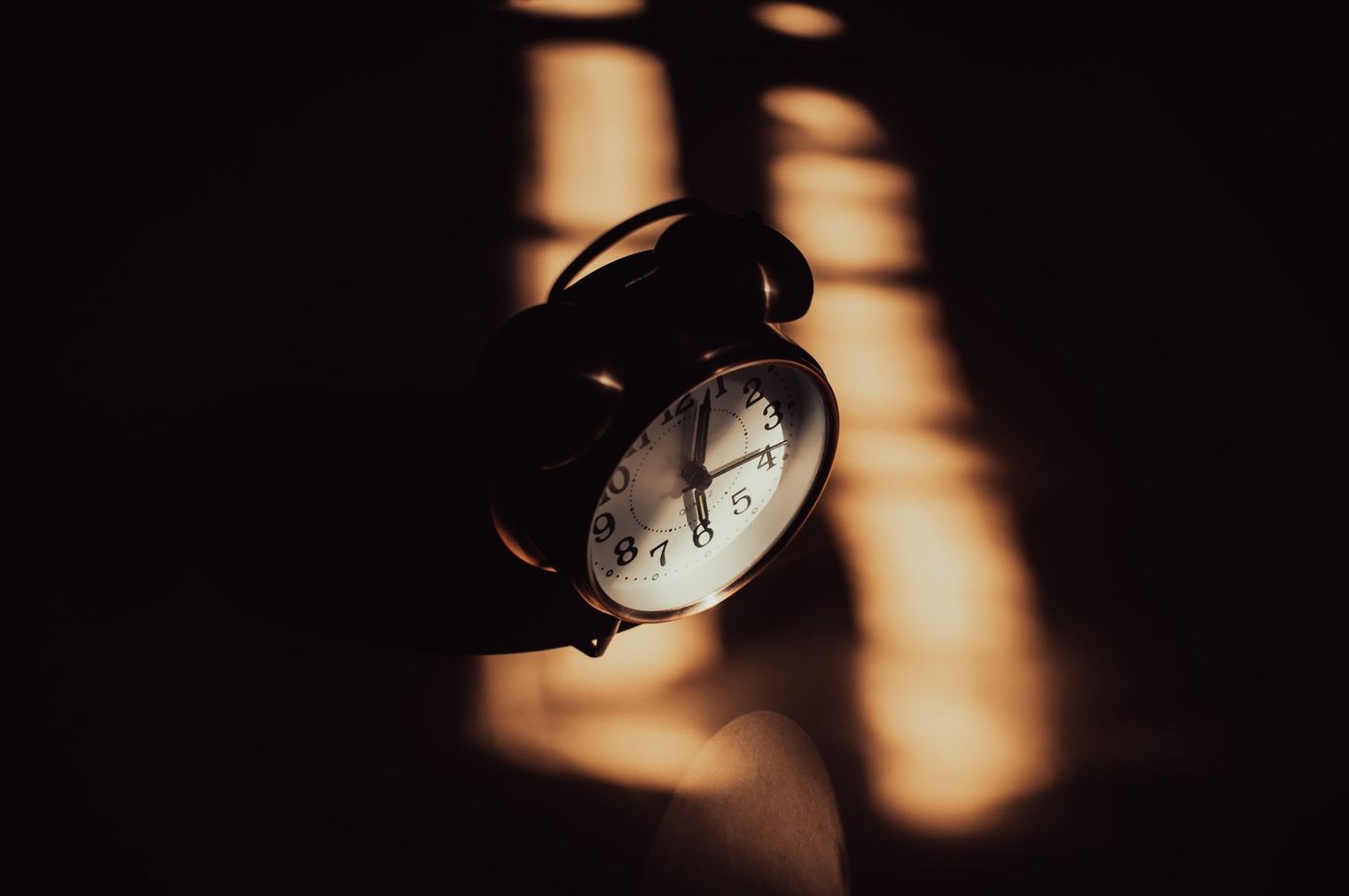
Noon used to be a local fact. It was the moment the sun stood highest over your own town, which meant every town kept its own time and the differences were small enough that nobody cared until the railroads arrived. Two trains running on different towns’ clocks is a good way to end up on the same track, so in 1883 the American railroads imposed standard time on the country before any legislature got around to it. The system we treat as natural is a scheduling convention that a private industry adopted to keep its timetables honest. It has been with us long enough that we mistake it for physics.
Daylight saving is stranger than that, because it does not even pretend to move anything real. In March we agree to call seven o’clock eight. Nothing in the sky changes. Only the label does. The hour is not created, it is transferred, taken off the morning and added to the evening, and we all know this in the abstract while behaving as if the evening light were free.
Dava Sobel, writing in Aeon about clock time and the sun, describes civil time as something doled out to us the way water comes from a tap, processed and sanctioned. She also makes a confession that fits the argument here: one hour of seasonal change disturbs her more than a long flight across several time zones, and she thinks the reason is that nobody asked her.
The idea has a long, unserious paper trail. Benjamin Franklin, in Paris in 1784, wrote a joking letter about the economy of rising with the sun, complete with a proposal for firing cannons at sunrise to wake the idle and a calculation of the candles saved. A century later a British builder named William Willett campaigned for the scheme in earnest, mostly because he wanted more light for his afternoon golf. Germany adopted it in 1916 to save coal, Britain followed within weeks, and the United States got there in 1918. Energy was the argument from the start, and the savings have never been as large as the argument implies.
Who pays for the hour

The transfer is where the argument actually lives. Evening light is bought with morning darkness, and the buyer and the seller are not the same people.
On the receiving end are the diffuse pleasures: the patio that stays usable, the run after work that happens in daylight, the retail strip that gets one more browsing hour, the golf course with a full tee sheet. None of these is contemptible, and none of them arrives with a bill attached. They are just pleasant, and pleasant things are easy to defend.
On the paying end are the mornings. A child standing at a bus stop at 7:10 in November is standing there in a darkness that the clock change put back on the schedule. The roofer starts before sunrise either way, but the sunrise he is waiting for has been pushed an hour later than the sun’s own schedule requires. The nurse coming off a twelve-hour shift drives home through a dawn that has been delayed for reasons that have nothing to do with her body. The parent doing drop-off and then a full day of work absorbs the cost in a way that never shows up in anybody’s estimate.
Bodies do not negotiate over labels. The internal clock takes its cues from light, and morning light is the strongest cue available. In 2020 the American Academy of Sleep Medicine published a position statement in the Journal of Clinical Sleep Medicine calling for the seasonal changes to be abolished in favor of permanent standard time, citing evidence of cardiovascular events, mood disturbances, and traffic crashes in the days after the spring shift, and arguing that standard time is better aligned with human circadian biology. The people who study sleep have been saying this for six years while the country keeps changing its clocks.
There is an old story that daylight saving exists for farmers. The farm lobby fought the first American version in 1918 and kept fighting it for years afterward, because cows do not read clocks and the milking happens in the dark regardless of what the label on the hour says. The story survives because it is a useful way to make the policy sound folksy. It was never true.
The odd thing is that we can feel the asymmetry without being able to name it. November is popular and March is hated, and the two changes are the same size. The only difference is direction. One hands out an hour and one collects it, and we have strong feelings about which end of the transaction we are on.
A country tried it and changed its mind
We have run the experiment at national scale, and we did not like the result.
In December 1973, with the oil embargo biting, Congress passed and Nixon signed a law putting the country on year-round daylight saving time for two years. It took effect on January 6, 1974. Approval was above 70 percent before the change and had fallen below half by February. The reason was not an argument. It was sunrise, arriving after eight in much of the country, and children leaving for school in the dark.
The reporting from that winter is grim and specific. Contemporary accounts counted eight schoolchildren killed in traffic in Florida that January against two in the same period the year before, and the state’s education department attributed six of those deaths to children going to school in darkness. Parents organized. A governor called a special session. By October, Congress had voted to go back to standard time for the winter months. The amendment Ford signed on October 5, 1974 is a single page long. It does not argue. It exempts the country from year-round daylight saving between the last Sunday in October and the last Sunday in February, and that is the whole of the retreat. The country had lasted ten months.
It is tempting to file this as a failure of permanent daylight saving, and plenty of people do. The honest reading is narrower. The country approved of a rule in the abstract and then discovered what it cost by watching who got hurt. That is how most moral learning works, and it is not flattering: we are good at estimating benefits and terrible at estimating the distribution of costs until the costs acquire faces.
The 1974 episode is also cited by people who want permanent daylight saving, on the theory that the failure was a cold winter and a school schedule nobody adjusted. Maybe. But the episode is evidence for something more basic than either side wants to admit. It shows that the hour has an owner, and that the owner is usually not in the room when the decision is made.
The arithmetic we refuse to do
Most policies of this kind survive because the winners are few and organized and the losers too scattered to fight. Daylight saving runs the other way, which is part of why the argument never gets settled. The benefit is spread across everyone with a patio, and the cost lands on a group with no trade association and no press office: children at bus stops, shift workers, parents doing the morning run. There is nobody to negotiate with, so nothing gets negotiated.
We already have a vocabulary for this kind of accounting. A minute is not sacred, but it belongs to somebody, which is why we have written before about why chronic lateness is an ethical failure and not a scheduling quirk. And a line at a counter is a small machine for making an abstract claim about fairness visible, which is the argument behind the queue as a moral technology. In both cases the harm is real even though nobody can point to a receipt.
The same habit shows up in the built environment, where a decision made for the typical user becomes a daily insult for everyone who isn’t: the bench that will not let you lie down is a rule about who public space is for, written in metal. A national clock is that kind of decision, made once for an average American whose morning is not a schoolchild’s morning and whose evening is not a shift worker’s evening.
Pick one, and stop pretending
There are two coherent positions, and I do not think the choice between them is the important part.
Permanent standard time is the sleep doctors’ answer, and it has the virtue of being the time your body already expects in winter. Summer evenings would still be long without the label change; the sun does not care what we call the hour.
Permanent daylight saving is the leisure and retail answer, and it is what the states have been voting for. Nineteen of them have passed laws that would switch them to year-round daylight saving the moment Congress allows it, and the Congressional Research Service counts them every year. Europe has its own version of the same stalemate: the European Parliament voted in March 2019, 410 to 192, to discontinue the seasonal change, and the Council has never agreed on the terms, so the clocks keep moving while the paperwork sits there.
What is not coherent is the current arrangement, which delivers neither stable mornings nor stable evenings and charges the transition cost twice a year to whoever is least able to absorb it. The biannual switch is a compromise between two positions that has somehow ended up more expensive than either of them.
I am not neutral about which hour I want. I want the long evening, the one where the light lasts past dinner and the day does not end at four. I also know that this preference is exactly the kind that costs somebody else something I will never see, and that the people who study sleep have been telling us for years which end of the day the bill lands on.
The stove clock will keep blinking until somebody in this house gets annoyed enough to fix it, which usually happens around January, and then the kitchen will tell the truth for a few months. March will arrive, the hour will get collected again, and most of us will be surprised by the dark even though it happens every single year.
The hour was never free. Somebody’s morning paid for it. The only decision left is whether we keep borrowing it, or finally choose which morning we are willing to spend.