

The House Can’t Be Split: On Inheritance and the Ethics of Who Gets What
The house is the problem. Three siblings, one house, and no way to divide it. One wants to sell and take the money. One wants to keep it, because her children learned to swim in the pond behind it. One has lived there for six years, cooking for Dad and driving him to appointments, and cannot explain to anyone, including himself, what those years are worth in dollars.
An equal split solves this on paper. It is also the answer most families reach for because it ends the conversation before anyone has to say what they want.
Equal is the default, and the default is doing a lot of work

Equal shares have real virtues. They are hard to game, easy to explain, and they remove the chance that a parent’s affection gets priced into a decimal point. A family that splits everything three ways has bought itself a defense against favoritism, and against the suspicion of it, which may be the more corrosive of the two.
But equal division answers a narrower question than the one people are actually asking. It divides an estate. It does not divide a history.
Consider the ledger every family keeps and almost nobody writes down. The down payment in 2012 that was a loan in name only. The two years one child moved home after a divorce. The funeral paid upfront by the sibling who has not been reimbursed. The one who calls every Sunday and the one who calls twice a year, and whether either counts as a contribution. None of it appears in the will. All of it is in the room when the will is read.
Procedural fairness is a real achievement, and it is worth noticing when it is being used as a substitute for judgment. Equal treatment and fair treatment are not the same thing. Splitting evenly protects you from having to say that one sibling took more than the other over the years, or that one gave more. Those are hard sentences to say out loud, and no formula says them for you.
Care is the contribution that never reaches the balance sheet
Estate law counts assets. It does not count hours.
The person who moved in for the last eighteen months, who handled the insurance calls and the medication schedule and the hospital paperwork, has already transferred something into that estate. They kept the house standing and the parent out of a facility that would have eaten the savings. In any market that work carries a price. In the estate it appears as a zero.
The hard part is that the obvious correction, paying the caregiver, can make things worse. Start keeping a timesheet on your mother’s last years and you have turned a relationship into an invoice. Families that try it tend to find the accounting does more damage than the imbalance it was meant to correct.
So the question is not how to price care. It is whether the family can name it before the estate is divided. “She did the last two years” is a sentence that changes the shape of a distribution whether or not it changes a number. A will that splits everything evenly and never mentions the care has not stayed neutral. It has decided that the most demanding contribution was invisible, and the person who made it will read the message correctly.
A will is a message to someone who can no longer answer

The document at the center of all this has a strange feature. It speaks once, at the end, with final authority, and the person who wrote it is not available for questions.
Families fill that silence with claims. She told me I could have the tools. He promised me the truck. The house was supposed to come to me, because I was the one who… The claims are often true, or true in part, and there is no way to test them. What remains is an argument between people who loved the same person, each holding a fragment of a conversation that ended.
The remedy is dull and everyone already knows it. Write it down. Say it out loud while you are alive. If the shares are unequal, give the reason to the person who will receive less, in person, with enough time for them to argue back. A reason delivered after death is not a reason. It is a ruling.
Something better is available, and it is a habit rather than a document. Give the objects away while you can watch them arrive. The clock, the ring, the cast iron pan that weighs nine pounds. Handing something over while you are alive turns an inheritance into a gift, and a gift has a witness. The person receives it along with the look on your face. Nobody can litigate that later.
What inheritance actually transfers
Step back from the family and the stakes change shape. Inheritance is the largest transfer of wealth most families will ever handle, and it arrives at the one moment when nobody is in a position to negotiate.
The case against inherited advantage is old and serious. Daniel Halliday argues that unearned wealth behaves like a flow, moving down through families and carrying more than money: networks and expectations, the confidence of people who have never had to ask twice. Over enough generations the flow produces what he calls economic segregation, a society where the starting line is set at birth. His reviewers state the claim plainly: a democracy that lets wealth accumulate across generations will drift toward an aristocracy in fact if not in law.
The other side deserves equal weight, and not as a talking point. Daniel Waldenström’s survey of the evidence finds inheritance flows rising across Western economies while the dynastic story is weaker than it sounds. Most bequests are modest and go to ordinary heirs who use them to buy a house or clear a debt, and in that range an inheritance can narrow a gap rather than widen one. The panic about a new aristocracy, on his reading, mistakes a larger pie for a more rigid one.
Both arguments turn on desert and luck, weighted differently. Neither settles the question most people actually face, which is what to do inside their own family. And here is the awkward part: you can believe inherited advantage is unfair in the aggregate and still believe a parent should be able to leave the house to their children. Most people hold both. That is a real tension between two goods rather than hypocrisy, and pretending one of them away is how people end up with opinions that do not survive contact with their own lives.
What follows from holding both is an obligation, not a conclusion. Accept the transfer and accept something attached to it. Pay the tax without pretending you are being robbed. Fund the thing that hands someone else a starting line. Be the person who did not need the money, which is the only credential that means anything in this argument.
The conversation that should happen before the death
Most of the damage in inheritance happens before anyone dies, in the silence around the will.
A few things are worth doing while there is still time. Hold the conversation with everyone in the room, not through a lawyer’s letters. Name the advances, the loans that were not loans, the years of care. Put the sentimental objects on a list with names beside them, and let people say what they want in front of each other, so the asking is not a contest conducted in private grief. Pick an executor who is not also the largest beneficiary, or at least say the conflict out loud instead of trusting goodwill to absorb it.
Where the shares are unequal, write the reason down and read it to the people it affects. “Your brother gets the house because he has lived in it and kept it up for six years, and because he has nowhere else to go” is a sentence a family can live with. The same distribution with no explanation becomes a wound that reopens every holiday for twenty years.
None of this requires a family to be good at feelings. It requires them to be specific, which turns out to be harder than it sounds in a room full of people who have known each other longest and therefore believe they no longer need to explain.
The objects are not the point, which is why they matter
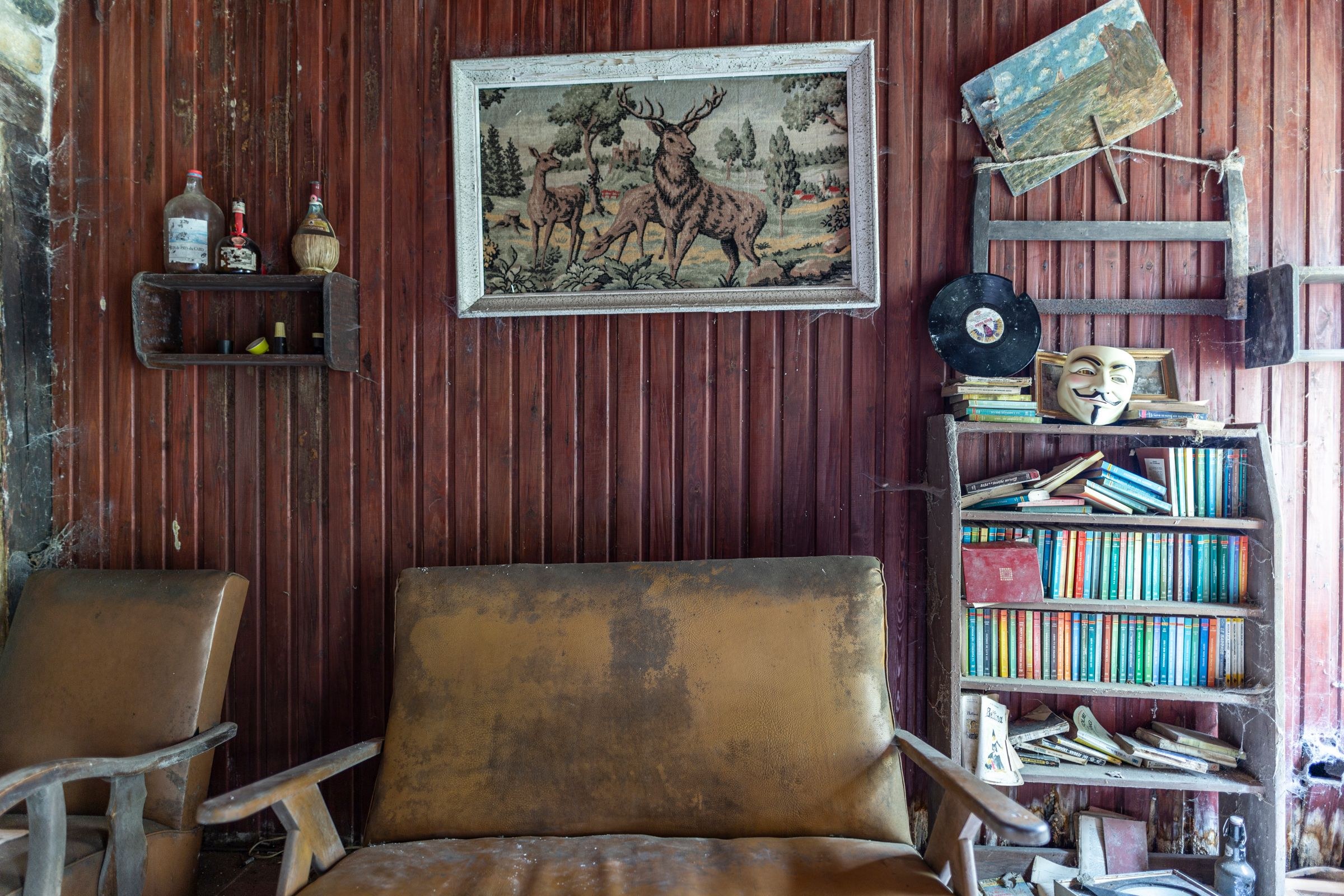
Then there is the coffee table.
It is worth forty dollars, it is missing a corner where a dog chewed it in 1998, and three people want it. The fight is not about wood. The table indexes something that cannot be divided, which is exactly why the table gets fought over.
A friend’s family spent most of an afternoon on a broken lamp once. Not the estate, not the house, not the savings account that had to be closed at a branch two towns over. A lamp with a cracked shade and a switch that only worked on the third try. It went home with the youngest daughter, who had never liked it before that day.
The mistake in these disputes is treating the object as property and starting to negotiate its value. The better question is what the thing is doing for the person who wants it. Ask, and a story comes out. This is where she put her feet up during the ballgame. This is the only thing in the house that still smells like the kitchen. Once the story is out the options open up. The person who wants it most can have it. It can travel between houses. It can be photographed properly and let go. The rest of the house still has to go somewhere, and the arithmetic of it, truckload by truckload, is its own quiet reckoning.
What people are usually asking for is not possession. It is confirmation that the relationship was real and that somebody was paying attention. You can give that without giving them the table.
So what happens to the house
Back to the three siblings.
No formula produces the right answer, and an essay that offers one is selling something. Buy out the sibling who wants out, at a real appraisal. Rent the house to the one living in it, at market, on a written lease. Sell it and adjust the split for the six years of care. Keep it jointly with an agreement about taxes and repairs that somebody actually types up. Each of those can be fair. None of them is fair when it gets decided in silence and announced as a fait accompli.
The distinction that matters is between an unequal arrangement everyone discussed and agreed to, and an equal one nobody discussed. The first is a family making a decision. The second is a family postponing one, usually into the next generation, where it becomes someone else’s problem and someone else’s grudge. Resentment over an inheritance is a special kind, aimed at people you cannot leave and cannot replace. It gets inherited too.
In the kitchen, after the reading, the argument is never really about the house. It is about whether the last six years counted, and whether the phone calls counted, and whether any of it was ever being tracked at all. Money is the only ledger the law will read. The family keeps its own, and it is older, and it is the one that will decide how the next thirty Thanksgivings go.