The Bench That Won’t Let You Sleep: On Hostile Design and Who Public Space Is For
There is a bench outside a train station near me with a metal bar bolted down the middle of the seat. The bar splits a three-seat bench into three single seats, and it exists because a bench with no divider can be used as a bed. Once you know that, you cannot stop seeing the family of objects it belongs to. The studs set into a ledge so nobody can sit on it. The seat that slopes forward so the sitter has to hold themselves up with their feet. The boulders under a bridge, the sprinklers that run at three in the morning. None of this is an accident of design. Someone specified it, priced it, ordered it, and signed it off.
That last part is what I keep coming back to. A city made a moral decision, wrote it into a purchase order, and installed it where everyone can see it. Almost nobody reads it that way. It looks like furniture.
The words came before the furniture
English has a small vocabulary for this now: hostile architecture, defensive architecture, exclusionary design, unpleasant design. The inventory of measures is longer than most people expect: benches with centre armrests, sloped window sills, intermittent sprinklers, fences around the dry warm spaces under stairs.
The practice is older than the words. Cities have always shaped behaviour through their built form, and some of that shaping has been about who gets to be present. The modern template is younger. In the 1970s the architect Oscar Newman argued that crime could be reduced by designing space so residents could see what happened in it, an idea he called defensible space, and he meant the gaps between buildings on housing estates. Then the theory trickled down from neighbourhoods to millimetres. The armrest is Newman’s idea applied to a single seat.
The phrase entered public argument properly in 2014, when metal spikes went in outside a London residential building to stop people sleeping in the doorway. Outrage followed, the spikes came out, and journalists needed a name for what they had been looking at. The Guardian’s reporting that summer is where a lot of people, me included, first met the term. What strikes me now is that the spikes were the crude end of the spectrum. The interesting examples are quieter, and entirely legal.
The bench is a confession
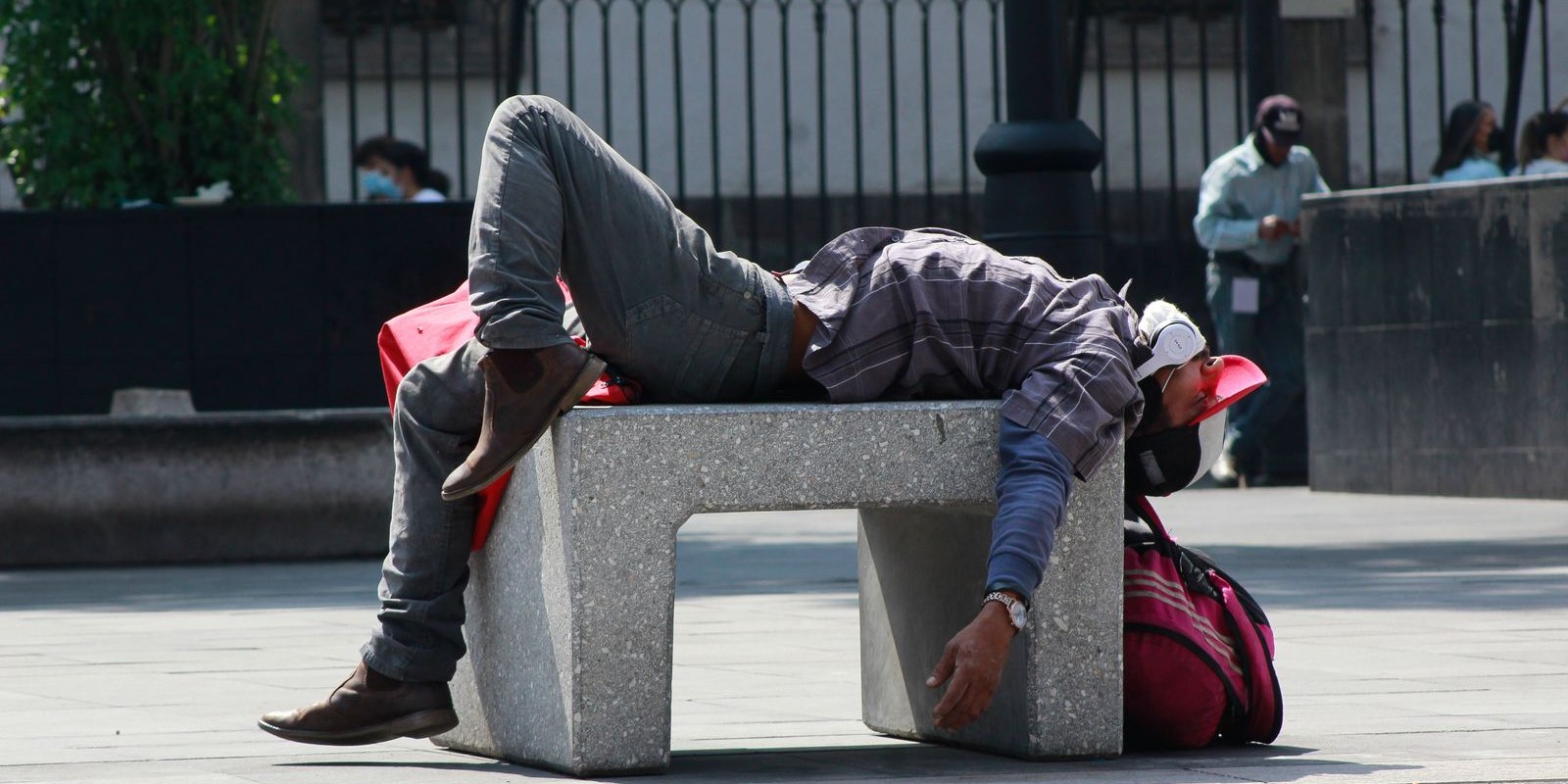
The Camden bench is the famous case. It was commissioned by the London Borough of Camden, installed in Holborn in 2012, and built by the British street furniture company Factory Furniture. It is a slab of exposed aggregate concrete weighing about 1,765 kilograms, with no slots, no crevices, and a cambered top. You cannot sleep on it, and the absence of gaps means there is nowhere to stash a bag of drugs or shove a wrapper. It sheds paint rather than holding graffiti. The Design Council gave it an award in 2012 for reducing crime. Every feature does exactly the job it was built to do.
That is the part people find hardest to sit with. The bench works. Its designer, Dean Harvey, has described the goal as minimising the time people spend in a place, and the company argues that designing seats to accommodate sleeping would mean admitting society had given up on housing people. Disagree with that if you like, and I do, but you cannot accuse it of hiding. As spec sheets go, it is unusually candid.
Which is why I keep thinking of these objects as confessions rather than cruelties. A bench with a bar in it says something about rest: sit down, you are welcome to sit down, but your sitting has a ceiling. Rest that turns into sleeping has crossed a line, and the city will pay to hold that line in concrete rather than pay to respond to whatever makes a person want to lie down there. That is the choice, stated plainly, and you can read it off the seat.
The honest case for the other side
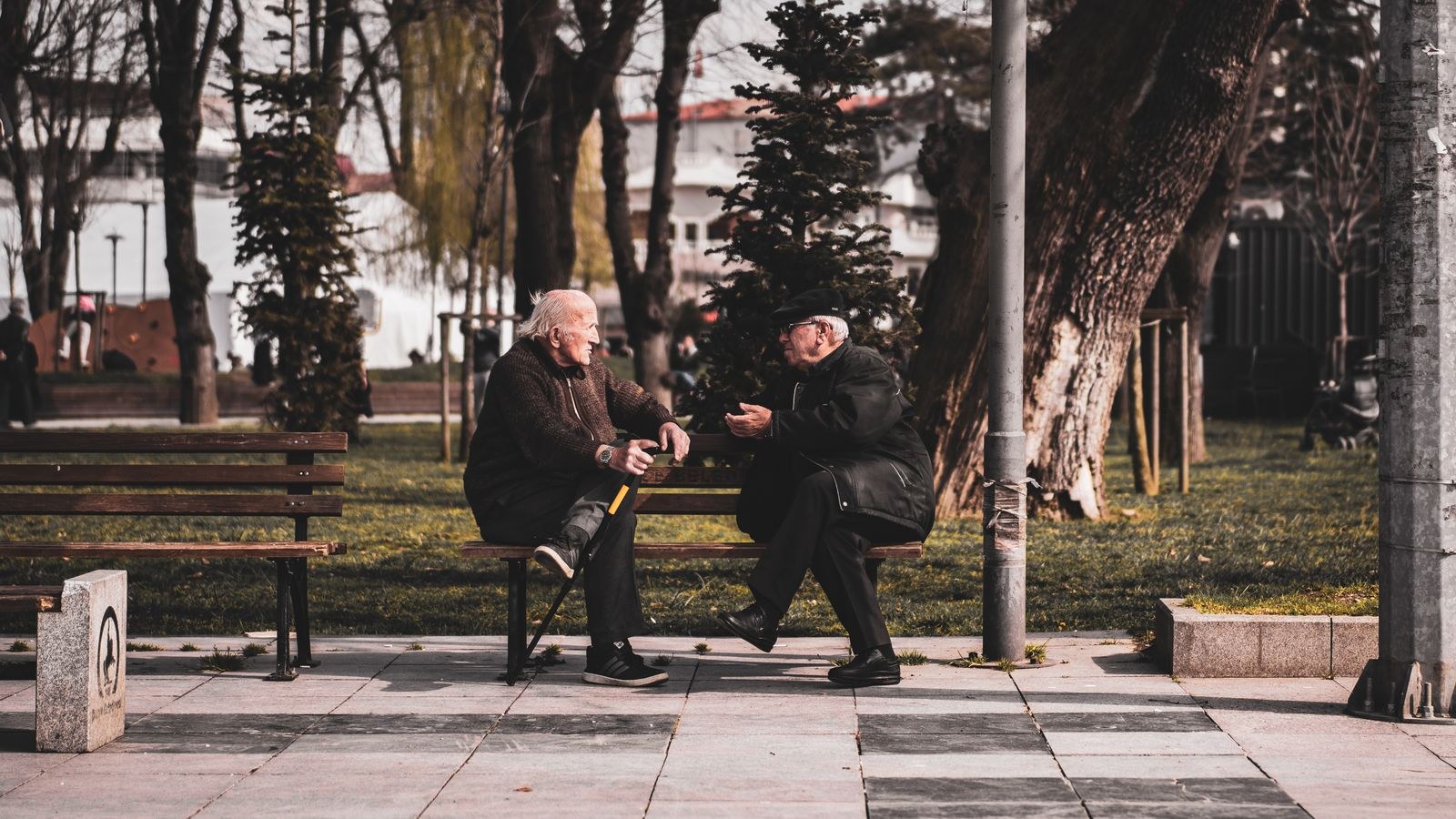
Start with a transit agency. It buys a bench so that people waiting for a bus can rest for nine minutes. If the bench becomes a place where somebody sleeps, it stops working as a bench. Nobody else can use it, the cleaning costs go up, and the next budget cycle removes the bench altogether. A sloped seat is a defence of the bench’s actual function. Then there is the armrest, which is a divider and also a grab bar; older passengers and people with balance problems use it to pull themselves upright, and removing it takes away something a group with modest real needs depends on. Cities are allowed to design for the ordinary case.
The stronger version of this argument has been made properly in the academic literature. In a 2017 paper in the journal Etikk i Praksis, the philosopher Karl de Fine Licht argues that the standard charges against these designs, that they cause suffering, that they show disrespect, that they violate a right to public space, are much harder to defend than critics assume. You can read his argument here, and it is worth doing, because the outrage reflex is lazy in a specific way: if every deterrent is an atrocity, you never have to ask whether this one is doing any harm.
Here is where I land after taking him seriously. A deterrent is legitimate when the person being deterred has somewhere else to go, and that condition is rarely met. If a city closes a bench to sleepers and there is a shelter bed with their name on it, the design is a redirection. If there is no bed, and no room in the shelter, and no housing list that will move them along this winter, the bench is not redirecting anybody. It is relocating a person, usually by about two hundred metres, to a doorway that will get its own treatment in six months.
And the costs do not stop with the person sleeping. Sloped seats exhaust old people who need to stop halfway home. Deterrents that keep teenagers off a ledge keep them off the one stretch of public space within walking distance of their housing. Guards on a plaza wall send skaters to a park two buses away, and the riders who cannot afford the fare stop skating. The burden lands on everyone with no private alternative to public space, which is the definition of not having money. That is a distribution question, not a design question, and cities almost never price it that way.

The design speaks mostly to the people it excludes
Defensive design is nearly invisible to the people it was not aimed at, which is what makes it so hard to argue about. You walk past a bench with a cambered top and see a bench. A person who has spent nights outdoors sees a lid.
This comes through most clearly in the work of Cara Chellew, a Toronto researcher who founded a project mapping defensive design in the city’s parks and public squares. Her argument, in this short piece for Spacing, is that the cues are legible to exactly the populations they target, and that everyone else reads them as ordinary streetscape. A second finding matters more: defensive features now appear in the renderings for new public spaces before anything has happened in them. Since nothing has gone wrong yet, the design is a guess about who will show up and a decision about who to keep out.
That is a strange kind of ethics. Nobody has to decide anything at the moment it costs something: no confrontation, no argument with the person on the bench. The choice is made once, at a desk, in a specification, and it stays invisible until someone tired enough notices it. It is the same logic we lean on when we decide not to look at something difficult, which is a right I think we do have. We have written about the right to look away, and about the good reasons for it: attention is finite, guilt is a poor fuel. Defensive design is that right, industrialised, letting a whole city look away at once and call it furniture.
What to ask before you pour the concrete
I do not think every armrest is a crime, and I do not think the people who install them are villains. The trouble is that we have no habit of asking a few questions before the object exists. Four of them seem to do most of the work.
Is the problem documented or anticipated? Ask for the incident reports. If a bench is being made unusable because of what happened last summer, that is an argument. If it is because of what somebody imagines might happen next, the design is a response to a population.
Is the exclusion stated out loud? Almost every hostile object goes in under the banner of safety, and safety is the word that ends the conversation. The honest version names the goal: we would prefer that people who sleep outdoors do not do it here. That sentence can be argued with, which is the point.
Does the excluded person have somewhere to go? Shelter capacity is a number, and it is either larger than the number of people sleeping outside or it is not. If it is not, a deterrent is displacement. Nothing was solved, one street got tidier, and the cost moved to the part of the city with the least ability to complain.
Who pays, and are they in the room? A deterrent costs a few hundred dollars, once. A night in a shelter costs far more than that, indefinitely. A city that buys the deterrent and skips the bed has made a budget decision about people who have no vote in the budget. We have written before about what it looks like when public institutions quietly serve the people with the most options, and this is the same pattern at the scale of a street.
There is a version of this argument that is about us rather than them. Public space is where a society practises being near people who are not like us, and that practice is small and unglamorous: queues, benches, the ordinary business of tolerating strangers. The piece we ran a few weeks ago about the dog park looked at a shared space where the arguments never stop and people keep having them anyway, because nobody has given up on anybody yet. Hostile design ends the argument by removing the person you would have had it with. That is efficient, and efficiency is a strange thing to want here.
The bench test
None of this requires a theory of justice. It requires a bench with nothing in the middle of it, a place for someone to lie down, and a city willing to pay for both, which is to say willing to spend more than it costs to make the problem invisible.
I have walked past the bench with the bar in it for years without once thinking of it as a decision. I have also been tired enough on a long walk to want an hour of sitting, and I have been the sort of person who would rather not look under the bridge. The bar on the bench flatters the third one. The design is aimed at the part of the public we all become when the day has been long enough.
So here is the plaque I would install, if cities were honest enough to put one up. It would say that this seat is intended for resting and not for staying, that the city chose this over the alternatives, and that the alternative it declined to fund was a bed. Then anyone sitting there would know what the concrete already knows: nobody was cruel, a preference was made permanent, and it was paid for.