The Brotherhood Is the Battery: How a Motorcycle Club Recharges Masculine Energy
There’s a morning every rider knows: you walk into the garage, the air is cold, and the battery is dead. Not the bike’s battery. Yours. You stand there with a coffee in one hand and a socket wrench in the other, and you can’t remember the last time another man looked you in the eye and told you something true about yourself. Not a performance review. Not a text. Something true.
I spent years pretending that was fine. That’s the lone-rider story we sell ourselves: the leather, the open road, no destination, no obligations. It moves bikes off showroom floors and fills movie seats. What it has to do with actually being a man is somewhere between nothing and actively harmful. The men I know who are doing okay aren’t lone wolves. They’re in a club.
This is the part nobody puts on the poster: a motorcycle club is one of the last places in American life where men recharge masculine energy the old-fashioned way, by being taught, being watched out for, and being held to a standard.
What “masculine energy” actually means
Let me be clear about terms, because the internet has made this phrase radioactive. I’m not talking about chest-thumping or dominance or owning the libs. I’m talking about something quieter: competence, accountability, and the feeling of being needed.
The world stopped handing these out somewhere along the way. Your father’s father learned his trade from his father and his uncles and the men at the shop. He learned how to fix things, how to show up, how to take a hit and stay standing. That pipeline is mostly dry now. Men get their advice from podcasts and their models from screens, and it shows. There’s a whole industry selling masculine energy in pill form to men who’ve never once had an older man put a hand on their shoulder and say, “That corner was better this week.”
A club doesn’t sell it. It just does it.
The mentorship engine
Here’s what nobody tells you about joining an MC: the first thing you get is not a patch. It’s an education.
In my club, new members ride at the rear, behind veterans who watch their line, their braking, their entry speed. It’s an apprenticeship, one of humanity’s oldest teaching structures. I wrote about why that structure keeps riders alive in Riding With the Pack. But the safety part is only half of it. The other half is what happens to the man being taught.
Nobody sits a grown man down anymore and tells him how to be one. His father may be gone, or distant, or a thousand miles away and doing his best but not saying much. The advice that used to flow from older men to younger men has dried up, and it’s killing us quietly. The Art of Manliness asked its readers what their fathers taught them, and the answers are the old curriculum: never be idle. Admit your mistakes, even when it’s painful. Stay calm in a fight. If you want something done right, do it yourself. Learn how to fail and keep going.
In a club, that curriculum is taught in person, over coffee in styrofoam cups at 7 a.m., in a parking lot with frost on the seats. A road captain who has forty years on you will tell you, to your face, that your line through that corner is sloppy. And then he’ll show you how to fix it. That’s fatherly advice with the father attached. It’s the thing Jon Tyson built a six-year rite of passage to give his son, the initiation into manhood, the “five shifts,” the being good at being a man instead of just thinking you are one (The Art of Manliness podcast with Jon Tyson). The club is a secular, two-wheeled version of the same idea: an initiation, repeated every Saturday.
The brotherhood that makes you a better man
Here’s a statistic that should embarrass every man reading this: most adult men don’t have a single friend they could call in a time of need. Stephen Mansfield has spent years on this, the male friendship crisis, the myth of the self-sufficient alpha male, and what he calls the band of brothers (Art of Manliness podcast #274). His argument is that close male friends don’t just keep you from falling apart. They shape you into a better man. That’s the part we don’t talk about: men need other men to become themselves.
The club is an intentional band of brothers. Not the kind you fall into by proximity, the kind you choose, with a patch and a handshake and a set of obligations. And here’s the strange magic of it: the obligations are the point. You show up. You pull your weight. You get called out when you’re wrong, and you get built up when you’re right. Being held to a standard by men who care about you is the most underrated experience a man can have. It’s accountability as a form of love, disguised as gruffness, because that’s how men do it.
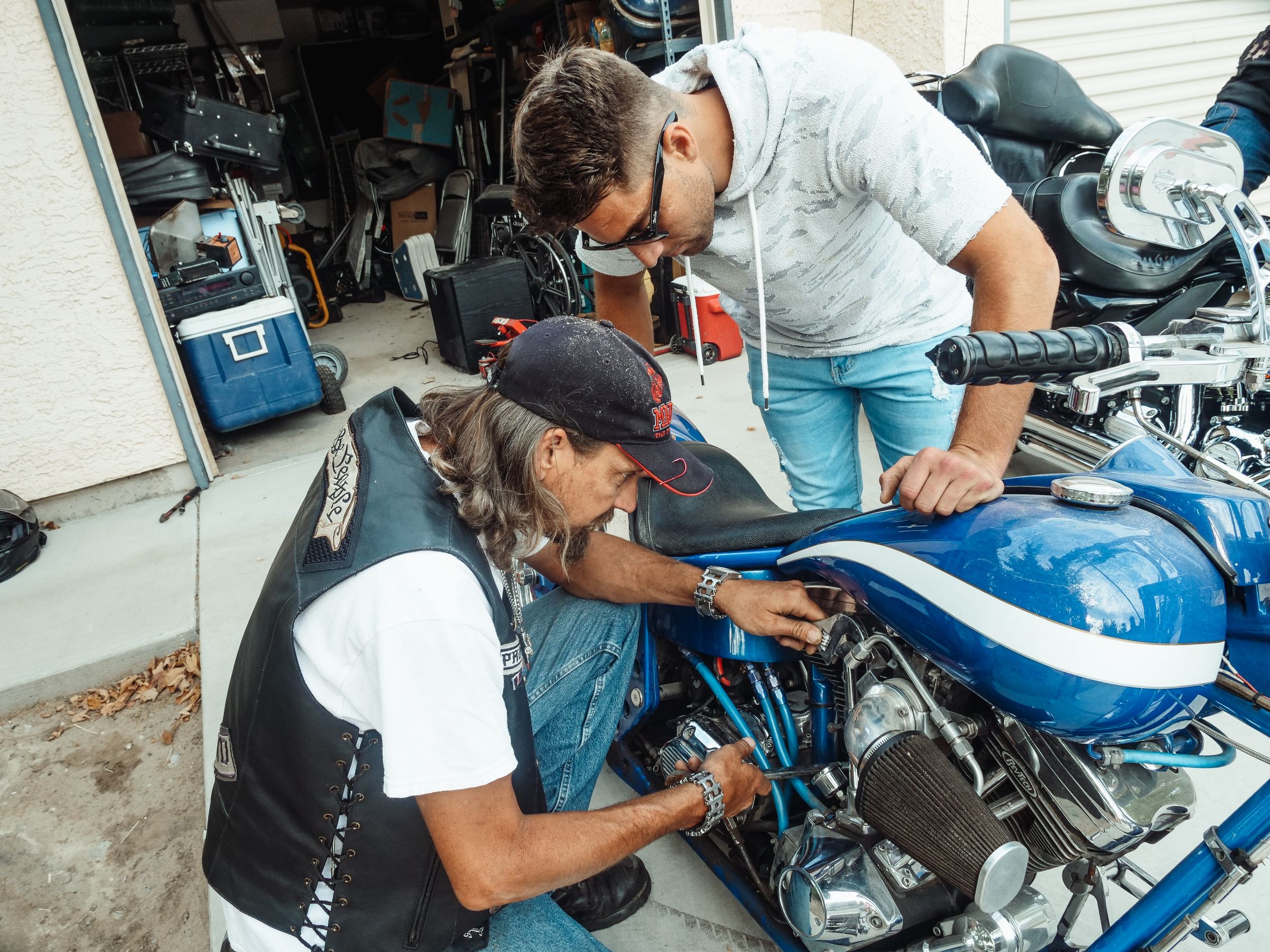
Men don’t do face-to-face friendship well. We do side-by-side. That’s why the garage and the road matter: we talk shoulder to shoulder, over the work, over the ride. The journalist Billy Baker spent years studying and then rebuilding male friendship, and landed on the men’s shed movement’s philosophy: men need somewhere to go, something to do, and someone to talk to. A club is that, with a v-twin soundtrack.
The recharge, in practice
People ask what club life is actually like, and they expect me to say the rallies, the poker runs, the noise. Those are good. But the recharge happens in the small moments.
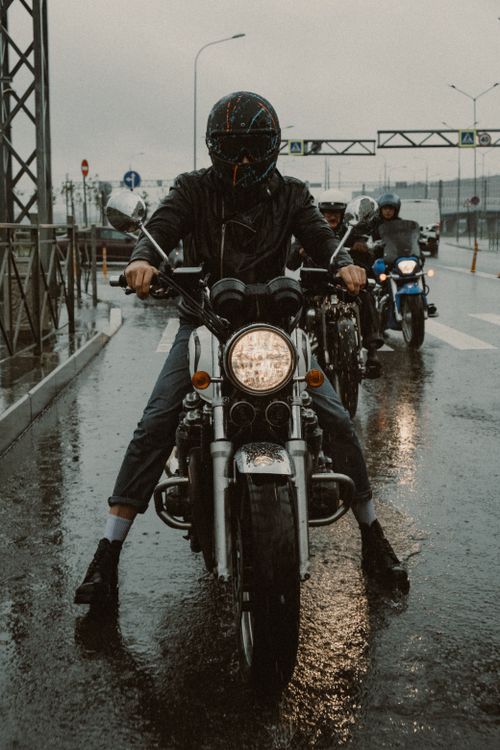
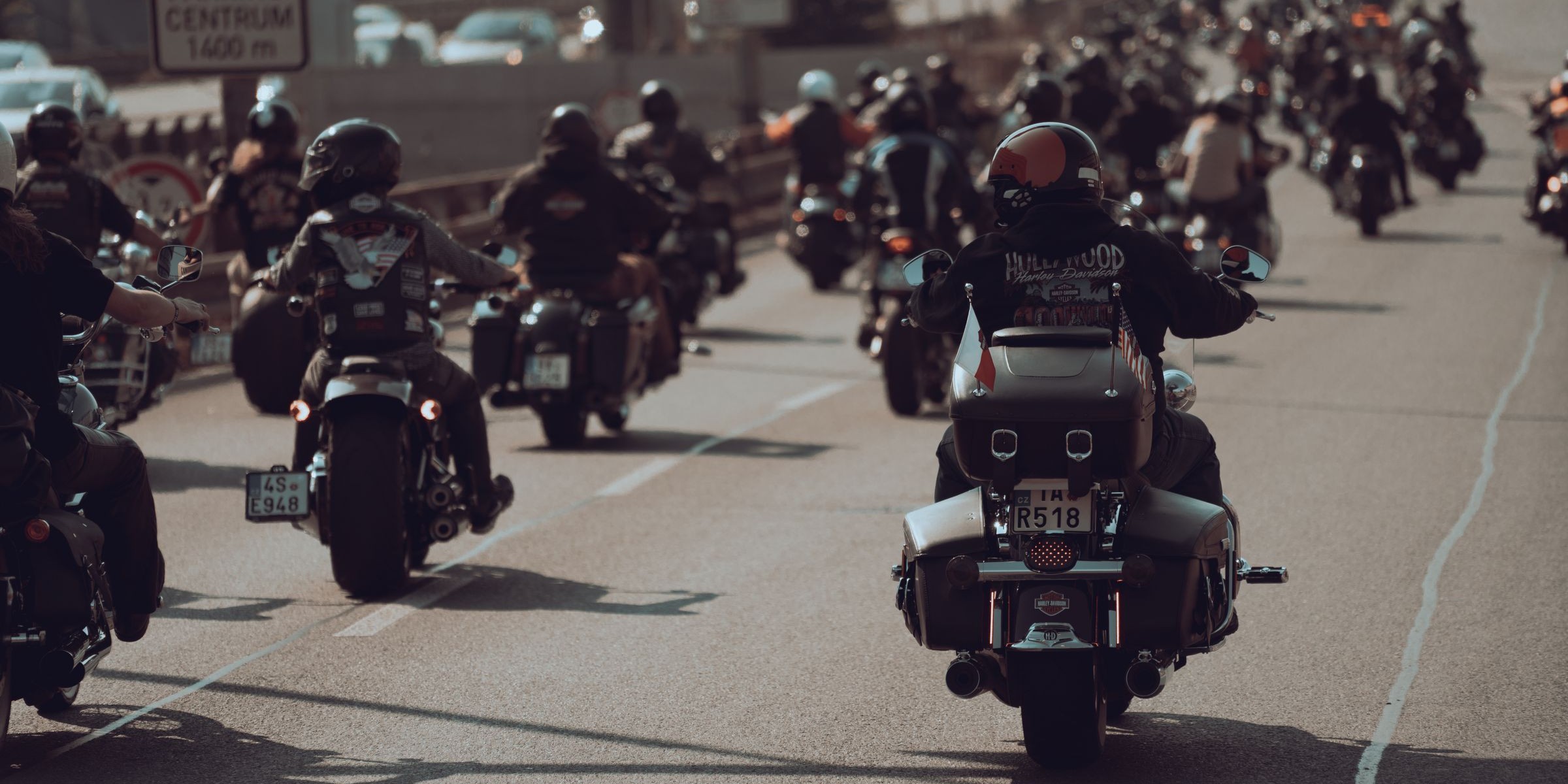
It’s the Saturday morning ride at sunrise, road captain up front, tail gunner behind, twelve men moving as one through the curves. It’s standing around the garage handing wrenches to a man who’s teaching you how to rejet a carburetor. It’s the quiet after a long day on the road, sitting on milk crates in a circle, nobody performing anything. It’s the phone call when you’ve been quiet for two weeks, because somebody noticed.
And it’s the patch. The kutte you wear says you belong to something, and belonging is not a small thing, I wrote about what that garment carries here. Being known. Being needed. Having a reason to get up and ride even when your battery is dead. That’s the recharge.
The honest part
I’m not selling you a utopia. Clubs are human institutions, which means they come with all the flaws of human institutions: hierarchy can curdle into ego, some clubs are genuinely toxic, and the 1% culture that gets the media attention is not the draw for most of us and not the point of this essay. If you’re looking for a group of men to drink with, you can find that anywhere. The question is whether you’ll find a group of men who will make you better. That’s a different bar.
The counterculture has always worked this way, communities at the margins building their own moral codes because the mainstream stopped providing one. I wrote about that dynamic in The Moral Logic of Rebellion. A motorcycle club is a small, loud, leather-clad example of a general truth: men need structures that teach them, watch out for them, and hold them to a standard. When those structures disappear, men don’t become more free. They just become more alone.
The battery, recharged
So here’s what I’d tell the man standing in his garage with the dead battery, the one who’s read this far: the problem isn’t that you’re weak. It’s that you’re isolated, and isolation is a condition, not a character flaw. The fix has been around longer than electricity: find men worth riding with.
If you ride, find the right club. Not the one with the biggest patch, the one where the old-timers will teach you, the road captain will ride your six, and somebody will notice when you go quiet. If you don’t ride, find your version of it. The garage, the shop, the crew, the thing that puts you shoulder to shoulder with other men who will hold you to a standard and build you up.
The battery doesn’t recharge itself. It recharges from other batteries. That’s how it’s always worked.