The Sound of Many Hands: On Applause and the Ethics of Approval
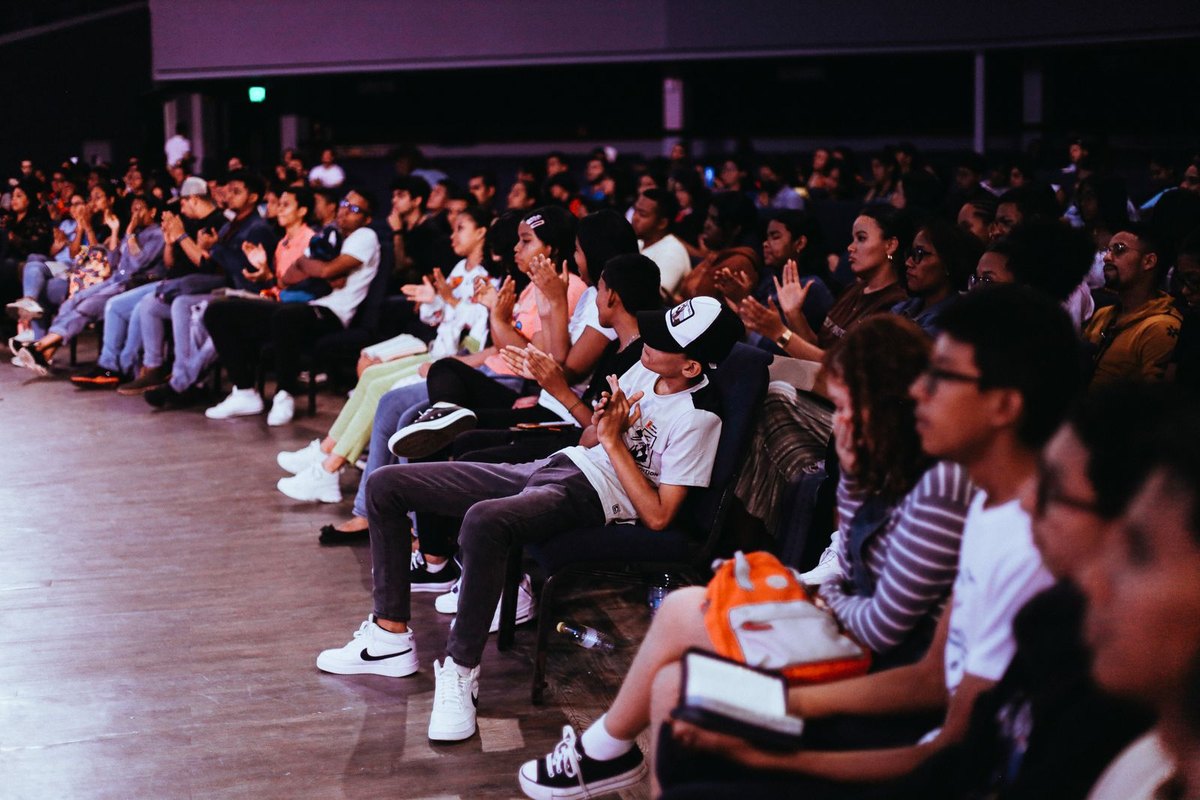
There is a second or two after the last note of a performance when nothing has happened yet and the whole room is waiting to find out what the room is going to do. Then a pair of hands starts somewhere off to the left, slightly ahead of everyone, and within three seconds the hall is going. Nobody decided this. Everybody decided this.
I have been on both sides of that second. I have been the person who claps first and then hears, with regret, exactly how loud his own hands are. I have also been the one who sits with his hands still while an ovation assembles around him, doing arithmetic about how long he can hold out before staying seated starts to cost something. The second position is the more instructive one. It shows you that applause tells a room more about itself than about the thing it just watched.
What the physicists measured
In 2000, Nature published a two-page paper with one of the best titles in the modern literature: “The sound of many hands clapping.” Zoltán Néda and four co-authors had recorded applause in concert halls, and they found that a crowd does not simply make noise. If clapping continues long enough, it falls into step. Hands adjust toward their neighbours until the audience locks onto a single rhythm, usually at half the earlier rate, and the sound changes from a wash into a pulse. The vocabulary in the paper is the vocabulary of physics, all period doubling and synchronization and the Kuramoto model. The phenomenon is social: a room turning into one instrument, with a frequency that has nothing to do with the music.
The start of applause has been measured too. In a 2013 study in the Journal of the Royal Society Interface, Richard Mann and three colleagues analysed recordings of clapping after academic talks. Your likelihood of starting to clap rises in proportion to the number of people who are already clapping. It behaves like a contagion, and the geography of the room barely matters. Starting is a threshold problem, and the threshold gets crossed by the confident few. Stopping is social as well, with a small nudge from the fact that arms get tired. Their simulation produced a result that ought to be printed on the wall of every awards ceremony: two talks the audience enjoyed equally can end in ovations of completely different lengths, because the length is an artifact of how a room manages its own exit. As the authors put it, the problem an audience has to solve is not when to begin clapping. It is how to agree on stopping.
This is why applause deserves the same attention we have given to queues. A queue is a coordination device that turns a crowd into a fair order, and the rules that govern it are moral rules nobody wrote down. Applause is a coordination device that turns a crowd into a verdict. Both manufacture something that looks like a plain fact about the world, who was first and what was good, out of nothing but timing and proximity.
Paris paid for its applause
A century before anyone plotted applause on a graph, the Paris Opéra solved the coordination problem with a payroll. From the 1820s, theatres hired organized groups of applauders, the claque, a word that comes from the French for clapping. One early operator advertised the service, with admirable bluntness, as the Assurance des Succès Dramatiques, dramatic success insurance.
The most famous of the claque chiefs was August Levasseur. A contemporary described him as “large, robust, a veritable Hercules in size, and gifted with an extraordinary pair of hands,” and said he could only really be said to live at the Opéra. Levasseur took his fee in free tickets. Some he handed to his troops, some he sold at a profit. His people filed into the hall before the paying audience and spread out through it, and then they watched him the way an orchestra watches a conductor: he sat where all of them could see him and signalled when to clap, when to cheer, when to laugh and when to weep. The specialists had job titles. There were rieurs, professional laughers, and pleureurs who wept on cue, among them at least one woman who worked as a professional mourner by day and brought the same skill to the opera at night. Amelia Soth’s account of the operation in JSTOR Daily is worth reading in full, not least because the whole thing was documented, priced and administered as a business.
The ugly part is the corollary. If applause can be sold, it can be withdrawn as punishment. Louis-Désiré Véron, who ran the Opéra from 1831 to 1835, dealt with an over-confident stage mother by ordering the claque to give her daughter not a single clap. The dancer finished her pirouette and smiled graciously at the house, thanking the audience for an ovation that was on its way and never arrived. In Véron’s memoir, what follows is one of the great comic sentences in theatre history: “Throughout the house there reigned the most profound silence.”
That scene carries most of the ethics of applause in a couple of lines. A performer’s face is partly made of other people’s hands, which means the room can manufacture the expression on it or wipe the expression off. So why did the claque exist at all? Not because audiences were stupid. Because they were new. As the theatre historian Nicolas Till argues, the claque grew up alongside music criticism for the same reason: the opera house was filling with a bourgeois audience who were no longer sure what they were supposed to like, and somebody had to tell them. The paid applauders were a guide for people who did not trust their own ears. Modern versions are easy to list: canned laughter, bought reviews, the sign held up at a television taping that instructs the studio audience to clap, and every rating a company can seed.
The ovation arms race

The standing ovation has inflated in the same way. It used to mark the rare evening that rearranged something in you. Now it is the default response in a lot of rooms, and the inflation shows up in the coverage, where festival applause arrives with a duration attached. Six minutes of clapping means a good film, twelve means a great one, and this cannot possibly be true, because the length of applause is mostly a function of when the room agrees to stop. Once everyone knows the ovation is coming, it stops distinguishing anything. You have kept the noise and lost the signal.
Then there is the small social tax on being the one who stays seated. This is where applause starts to resemble something we have written about before: the obligation to be positive, and what it costs to sit in a room where enthusiasm is expected. In a theatre, the price of dissent is embarrassment. In a workplace or a family, the same currency buys a good deal more silence.
Applause in rooms where every hand is watched
There is a version of this that has nothing to do with performance. In settings where dissent is expensive, applause stops being a judgment on what was said and becomes proof of membership. The pattern is easy to recognize. Party congresses where speeches are followed by long, orchestrated ovations. Rallies where the loudest hands belong to the people with the most to lose. The giveaway is the inverse relationship between meaning and volume. Sincere applause is information, and information has limits: it is legible, it carries a message, it stops. Coerced applause carries nothing. It is attendance-taking with a soundtrack, and the more thunderous it gets, the less there is to learn from it.
Clapping for the carers
The clearest test case in recent memory is British. In the spring of 2020, people across the United Kingdom went out to their doorsteps on Thursday evenings and clapped for health workers. It was sincere, it was widespread, and it lasted about ten weeks. It is also the cleanest example I know of the difference between being recognized and being paid. Nurses and doctors said at the time, some of them with visible annoyance, that you cannot spend a clap. The gesture was not nothing. It was a real expression of gratitude from people who had very little else to offer from a doorstep, in a spring when nobody was allowed to offer anything else. I clapped on that street too, and I would do it again. What it also did was subtler. As we have argued in these pages, doing a small good thing can discharge the feeling that a larger thing is owed, and the feeling is often the part that gets discharged. A country that claps for the ward and then declines to fund it has not been generous twice. It has been generous once, in a currency nobody can deposit.
What the hands are for
None of this makes applause a fraud. The form has other uses, and they are the good ones. There is the applause when a plane lands badly and everyone is relieved to still be alive, an unembarrassed sound of shared relief. There is the clapping at the end of a eulogy, which rates nothing. It is a room agreeing to have felt the same thing at the same time, and it would be a strange kind of purity to refuse it. The same goes for the applause that follows a person saying something true in public at obvious cost to themselves.
The rule I have settled on is narrower than “only clap when you mean it.” It is a question about what the hands are substituting for. If the clapping stands in for a wage, a bed, a budget line, or a defence of the person made later, in private, where it would actually count, then it is a discount dressed as generosity. If it stands in for nothing, it is a gift, and a gift does not have to be earned to be worth giving. A tired performer on the last night of a long tour can have my hands whether or not the show was the best thing I saw that year. The clap is theirs. The rest of the sentence stays mine.
I still cannot tell, most nights, whether I am clapping because the piece moved me or because the person in front of me started. Probably both, in proportions I would not enjoy knowing. What I have decided is that I do not want my hands on automatic. I would rather not applaud something I did not think was good because the room was loud, and I would rather not stay in my seat while somebody who did the work stands there waiting to find out whether anyone noticed.
We get one pair of hands each. Most of the trouble, and most of the pleasure, is in working out what they are for.