The Porch Light: On Halloween and the Ethics of the Open Door
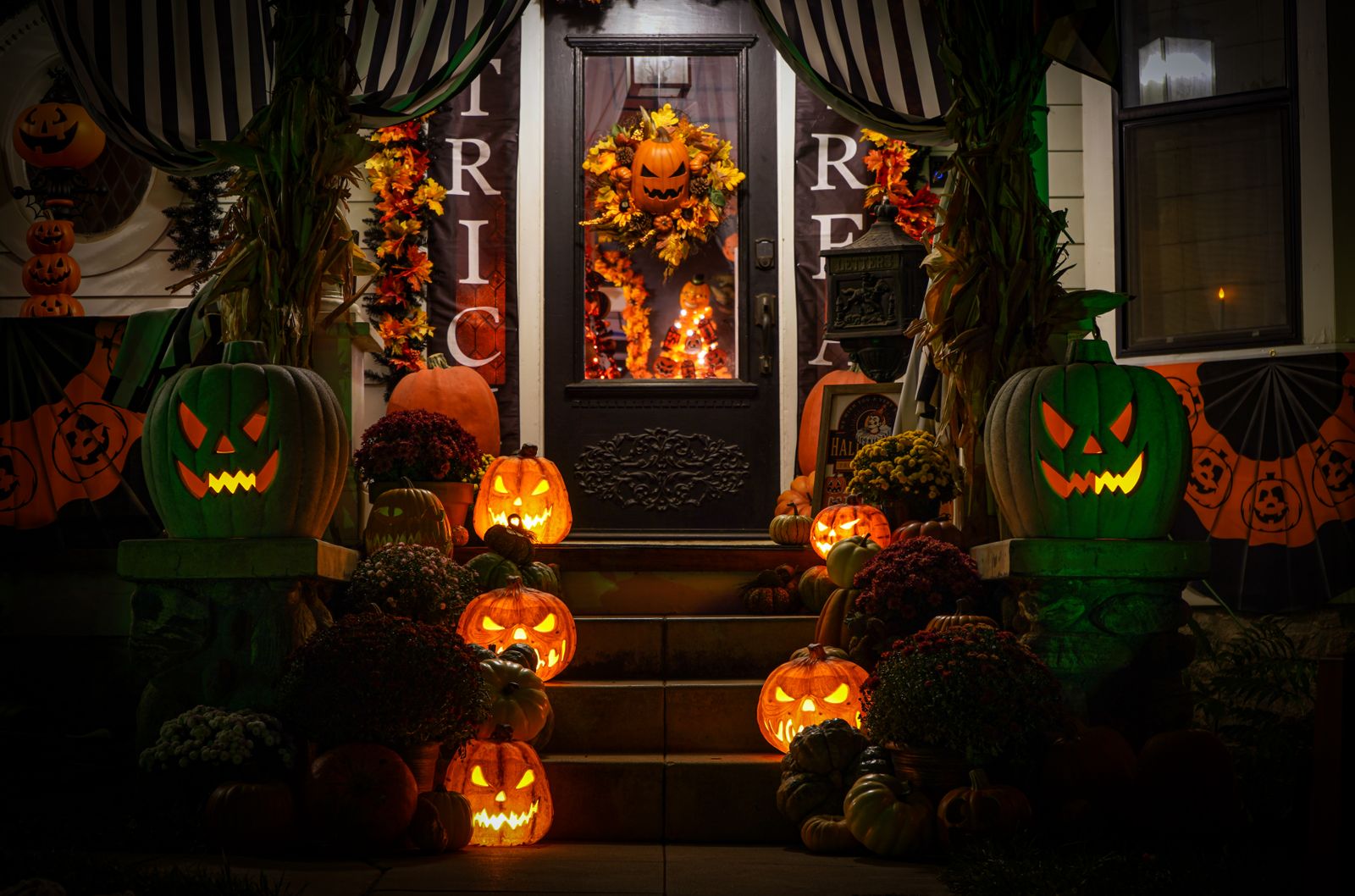
The porch light is the only vote I cast that my neighbors can see. On the last Saturday of October it goes on around six and stays on until the candy runs out, and for those hours the house says something it says on no other night of the year: come to the door, you are expected, there is something here for you.
The rest of the year, a stranger on the steps is a problem. We have built a small architecture around keeping them from getting that far. The camera above the door. The fence. The box that takes the delivery so nobody has to answer. Then one evening in autumn we flip a switch and invite the whole street to walk up and knock.
The reversal is not small. Once a year we hand children a claim on strangers’ property. The claim holds because it is so tightly bounded: one night, one street, one piece of candy, no forms at the door, no proof that you live here.
The light is a yes
Think about the other signals we use on each other. Headphones on the train. The closed sign in the shop window. The note taped to the door asking the courier to knock loudly because the bell is broken. Each one is a small instrument for managing other people without talking to them.
The porch light belongs in that family, and it is the best-made member of it. It is binary, so nobody has to interpret it, and revocable, so the householder can change their mind at nine o’clock without explaining anything to anyone. Because it addresses a crowd rather than a person, no single visitor is being judged when they walk past a dark house.
Set against the way refusal usually works, this is unusually generous design. Most no’s require a reason, and the reason becomes something to argue with. A dark porch offers no reason at all. It just says not here, tonight, and the street keeps moving.
There is a second thing the light does that we rarely notice. It makes the householder trust a stranger, in public, with the door open. Most of us do that exactly once a year.
A treaty that was signed in candy
Halloween in American cities in the 1920s and 1930s was not the gentle thing it is now. Soaped windows, ropes strung across sidewalks in the dark, gates lifted off their hinges, small fires. The pranks were not always small either, and by the Depression the holiday had a genuine public order problem on its hands.
Trick-or-treating was promoted in part as the answer. Adults would hand something out at the door, and in exchange the children of the neighborhood would agree to stop wrecking things. The custom spread through the thirties and took off after the war, when sugar rationing ended and the new suburbs gave kids a walkable route with houses close together.
Read it that way and the candy stops being the point. The candy was the deal. The bowl on the step is an installment payment on a truce that has held for eighty years.
That history explains why the ritual has rules at all. Nobody sat down and designed Halloween etiquette. It accreted from a negotiation between people who had to live near each other afterward.
The bowl on the step

Every year some household has a party to get to, or a kid of their own to walk around, so they leave a bowl on the step with a note. Please take one. Maybe two if you have a little one.
That bowl is a small experiment in trust, and it runs on nothing except other people’s restraint. Nobody audits it. Nobody weighs what is left at the end of the night against what was put out. Occasionally the whole bowl disappears, and the neighborhood produces a story about it that gets told for years.
What makes the arrangement work is mostly the price. The stakes are deliberately low, so cheating buys almost nothing. There are also witnesses in line behind you, and a rule that every child on the street already knows. The dog park runs on the same logic: a shared space stays usable because the cost of being the person who ruins it is social rather than legal. What holds a commons together is rarely enforcement. It is the fact that most people would rather be the kind of person who takes one.
The note itself is a study in moral tone. Please take one, we trust you reads very differently from TAKE ONE ONLY, I AM WATCHING. Same rule, opposite assumption about the reader, and the second version has already decided the night is going to go badly.
Why the teal pumpkin worked
Kids with food allergies used to come to the door and get handed a bag of things they could not eat. The Teal Pumpkin Project, run by Food Allergy Research and Education, fixed a piece of that with almost no machinery. Put a teal pumpkin on the step and it means there are non-food treats here, stickers or glow sticks or small toys, so a child with an allergy gets something that is actually theirs.
The design is worth studying for how little it demands. It does not ask anyone to stop giving out candy. It does not require a law, a platform policy, or anyone’s permission. It takes a fact that was invisible at the moment of decision and makes it visible, on the porch, where the decision gets made.
That is the cheapest kind of moral progress available to a neighborhood, and it spread the way useful things spread, one house at a time, because the people who adopted it could see the point immediately.
The kids who are too old
Every October somebody raises the question of teenagers in costume. The complaint is rarely that they are dangerous. It is that they are no longer cute, so they fail to pay the ritual’s emotional tax, and a thing that was charming in a seven-year-old reads as a demand in a fifteen-year-old.
Some towns have tried to settle it with an age limit. Most of those rules go unenforced, which tells you something about how well law fits a custom built out of neighborliness.
I think the teenagers belong. If the premise of the night is that a child may ask a stranger for something and expect to receive it, then the height of the asker is not part of the argument. A fourteen-year-old in a bedsheet has the same claim as a six-year-old in a bought costume, and turning him away mostly teaches him that the neighborhood’s generosity was always about how he looked rather than who he was.
The practical case points the same way. The treaty from the thirties included the older kids, who were the ones with the soap and the rope. Push them out of the ritual and you have not removed them from the street. You have removed the part where they get something for participating. Every scene that gates its membership has to ask what the gate is doing, and a costume-based age limit is doing something closer to taste enforcement than safety.
The parking lot

Trunk-or-treat started as a substitute for the real thing, mostly out of worry. Churches and schools open their lots, people decorate the backs of their cars, and kids walk a loop from tailgate to tailgate. No dark streets, no strangers’ doors, no steps to trip on, and the candy can be labeled for allergies.
The worries behind it are not imaginary. Traffic is real, sidewalks are uneven, and some neighborhoods have three houses with lights on and a lot of quiet in between. If the choice is a parking lot or nothing, the parking lot is better than nothing by a wide margin.
What gets lost is specific. A door belongs to a person. A tailgate belongs to an organization. The route through a neighborhood is a set of small private decisions that you can read from the street, and a loop in a lot is a single decision made in advance by whoever organized it. Everybody at trunk-or-treat is a guest of the same host.
The other thing that goes is the practice of being at ease with people you do not know. Max Holleran, writing in Aeon in 2022 about urban density, describes a neighborhood as something made by the low-grade familiarity of crossing paths with strangers over and over. Trick-or-treating is the one evening a year when we run that crossing on purpose, at scale, with the doors open.
We have gotten very good at designing public space so that it cannot be used the way people actually want to use it: benches with armrests in the middle, studs on ledges, sprinklers that come on at closing time. Trunk-or-treat is the soft version of that instinct. Nobody is being chased off. The discomfort has simply been engineered out, along with the encounter.
The dark house
Not every porch should be lit. Some people cannot afford a bag of candy this month. Some are on a fixed income, some are working, some have a baby asleep, some have a dog that loses its mind at the bell, and some have a reason nobody is owed.
The best thing about the porch light is that it lets all of those people say no without a hearing. No sign explaining the situation. No public account of why this house is sitting out the year. The light is off, the street moves on, and the refusal costs the refuser nothing in standing with their neighbors.
That is rarer than it should be. Most refusals now arrive with a demand attached: explain yourself, and then defend the explanation. A custom that lets you decline silently, on a night when everyone else is saying yes, has real respect built into it.
The only obligation it creates runs the other way. When you walk past a dark house, you owe it no theory. It is not a verdict on hospitality, or on kids, or on the neighborhood. It is a switch in the off position, and the whole design depends on nobody making it mean more than that.
What the light is for
On Saturday I will put the bowl on the step around eight so I can walk my own kid around the block. I will leave the light on. Somebody will take three instead of one, and I will never know which kid it was, and that is fine.
The candy is the least interesting part of the arrangement. What matters is that for about three hours the street agrees to be a street: a place where you can walk up to a house you have never entered, knock, and be expected. We could use more of that the other fifty-one weeks, and I do not think the way to get it is another app or another organized event in a parking lot. It is a switch on the wall by the door, and a willingness to leave it on for people you have not met.