
A New Art Form: Christopher Nolan’s The Odyssey as Non-Comedy Parody
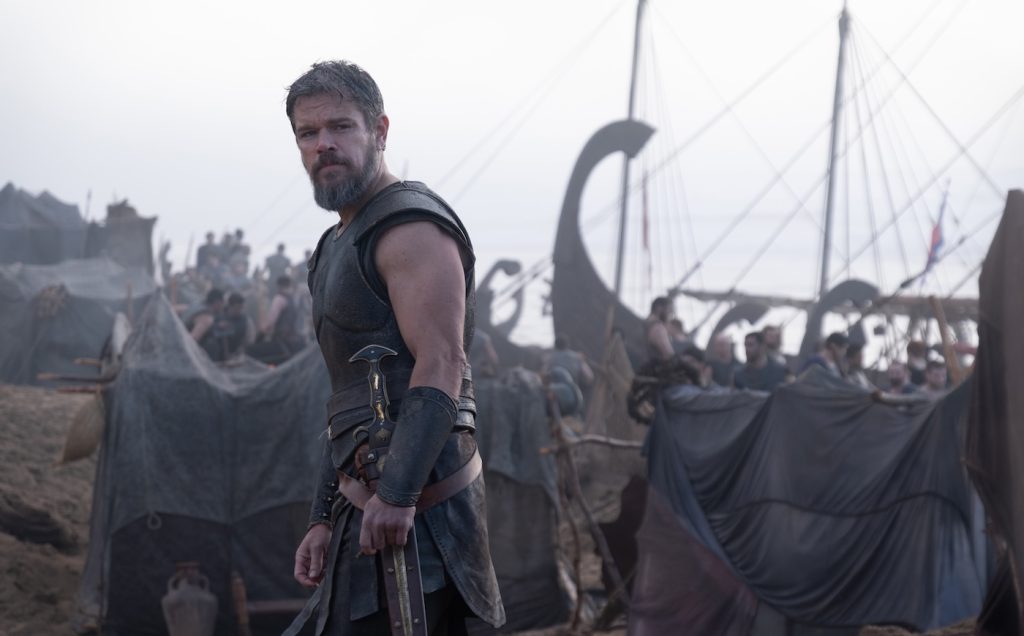
Matt Damon as Odysseus in Christopher Nolan’s The Odyssey (2026). Universal Pictures.
I walked out of Christopher Nolan’s The Odyssey feeling something I could not quite name. The movie is three hours of staggering craft. Matt Damon staring across wine-dark seas. Tom Holland looking worried. Zendaya smiling like she knows something you don’t. IMAX 70mm. Every penny of that $250 million budget visible on screen.
And yet. Something was missing. Something essential.
The more I sat with that absence, the more I realized it was not a flaw. It was the point.
Nolan has not made an adaptation of Homer’s Odyssey. He has made something stranger. A non-comedy parody. A work so radically different in tone from its source material that it functions as a critique through earnestness. It is the filmic equivalent of someone telling a joke with a completely straight face, removing all the punchlines, and expecting you to laugh anyway.
The Odyssey Was Never This Serious
Be honest about the original poem. Homer’s Odyssey is not a solemn epic. It is a messy, sprawling, often funny story. Odysseus gets his men killed because he cannot resist bragging. He spends seven years sleeping with Calypso. He tells the Cyclops his name is “Nobody” so that when he blinds him and the other Cyclopes ask who did it, Polyphemus has to shout “Nobody is hurting me!” which is a joke, and a good one.
The gods are worse. They squabble. They scheme. Zeus is not a dignified patriarch; he is easily distracted and frequently petty. Hermes shows up to give Odysseus a magic herb and then disappears. The whole thing has the energy of a divine reality show.
Nolan removes all of this. Entirely. Deliberately.
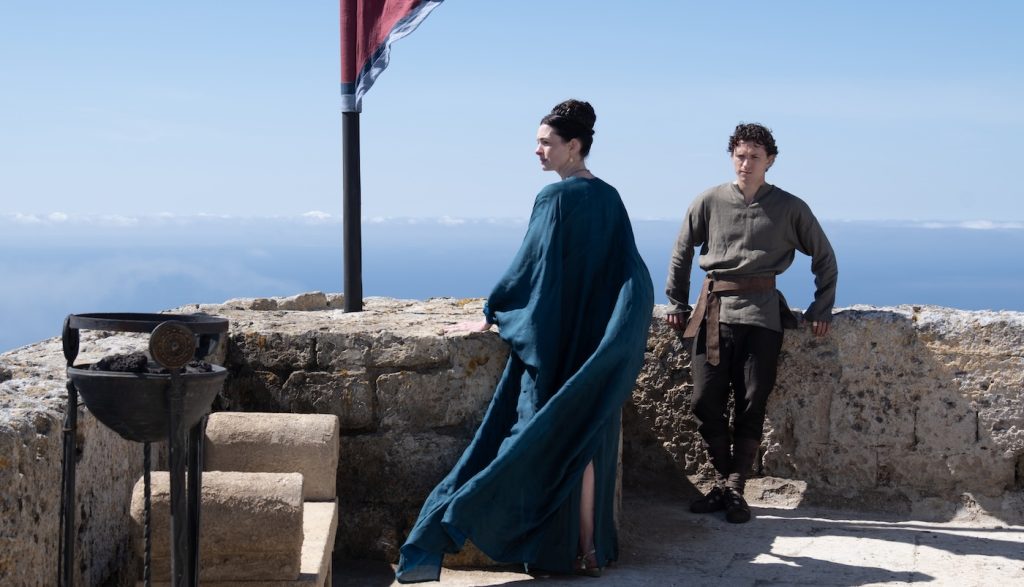
Zendaya as Athena. In Nolan’s film, the gods are reduced to Athena nodding and shaking her head. Universal Pictures.
The “Nobody” joke is gone. Odysseus blinds the Cyclops and escapes by wearing shrubbery on his back. The seven years with Calypso become a memory-erasing lotus-induced imprisonment. Circe does not seduce Odysseus; he threatens her instead. The gods are reduced to Athena, who mostly smiles or shakes her head. No Zeus. No Poseidon. No Hermes.
ScreenRant called the film “deadly serious about its story, with an undercurrent of tragedy.” That is accurate. The tonal complexity of the original (the way Homer weaves slapstick, grief, lust, and adventure into a single narrative) has been flattened into a single register: grave.
The Art of Removal
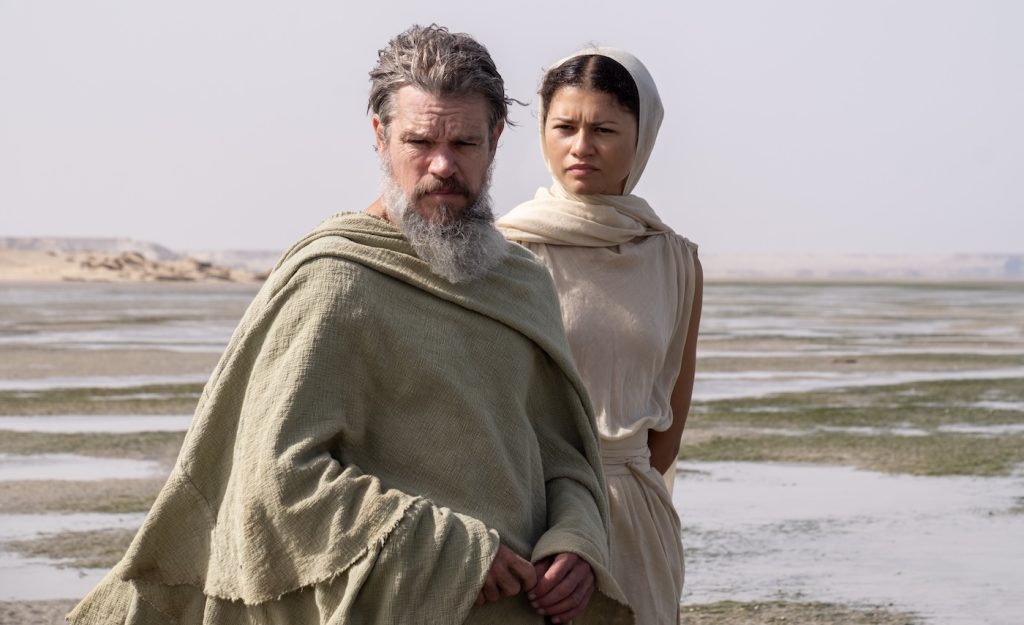
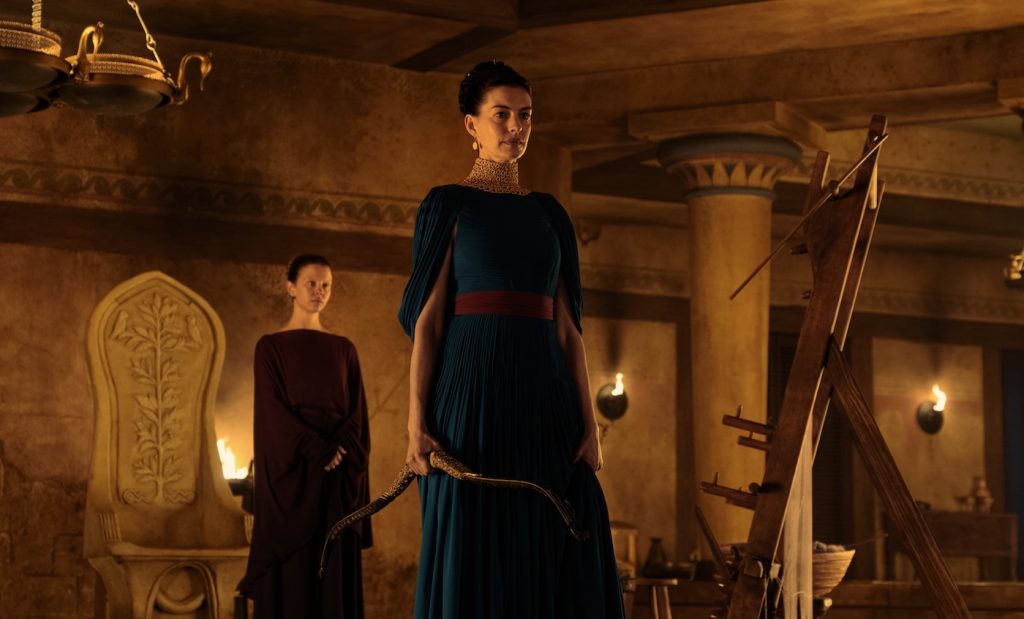
Anne Hathaway as Penelope. In Nolan’s version, she tells Telemachus she would watch the suitors burn. Universal Pictures.
A parody usually adds something. It exaggerates, mocks, or distorts. But there is another kind that works through subtraction. Remove enough of the original’s character, and what remains becomes a critique by its very incompleteness.
Nolan’s Odyssey is this second kind.
Consider the changes. Penelope is no longer weaving and unweaving a shroud. She tells Telemachus she would watch the suitors burn. Odysseus does not dress as a beggar; he hides his face under a hood. The Phaeacians are gone. The lotus-eaters are gone. Laertes, Odysseus’s father and one of the most moving characters in the poem, is gone entirely.
Telemachus is reduced from a warrior fighting alongside his father to a supporting character who kills one person. Everyone speaks in American accents. Jon Bernthal’s Menelaus sounds like Jon Bernthal.
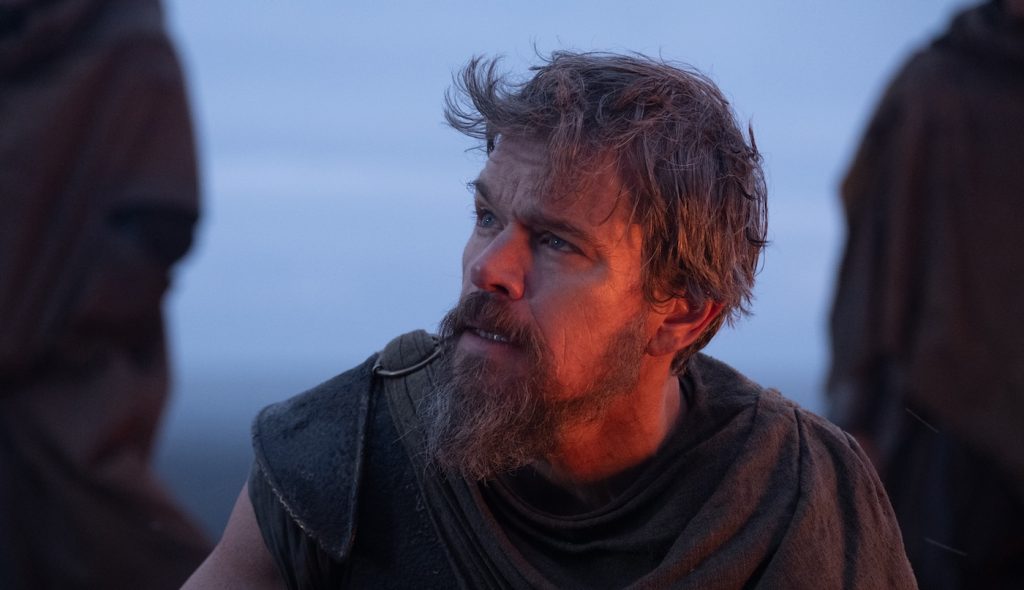
Tom Holland as Telemachus. In the poem he fights alongside his father; in the film he kills one person. Universal Pictures.
None of these changes are comic. Each one is played with absolute sincerity. And that is what makes the effect so strange. The movie treats Homer’s epic the way a very literal-minded person might treat a myth. It strips away metaphor, humor, and tonal richness in favor of something that makes logical, linear, realistic sense.
But Homer was not being realistic. That was not the point.
The Conspiracy of Earnestness
The Cyclops Polyphemus. The “Nobody” joke was cut; he just howls in pain. Universal Pictures.
NPR’s review described Nolan’s approach as “restrained and circumspect, both logical and psychological.” Variety called it “slightly aloof.” Rolling Stone noted that Nolan has “moulded it to be a modern parable about our times.”
That is the consensus: a serious, beautiful, intellectually rigorous film that is also somehow off in a way nobody can quite articulate.
I think the word they are reaching for is parody.
Not parody in the Scary Movie sense. Parody in the sense that the work cannot fully exist on its own terms because it has excised so much of what made the original matter. It is a monument built around an invisible statue. The craftsmanship is extraordinary. The intention is noble. And the whole thing feels like a prank played at Homer’s expense, a prank the prankster does not realize he is committing.
Ben Shapiro, of all people, called it a “masterpiece.” The conservative outrage machine that had been primed to hate it for its deviations from the source material mostly sputtered out after release. The movie is so earnest in its deviations that attacking it feels like attacking a child who drew a very serious picture of a unicorn and does not understand why you are laughing.
What This Means
I do not think Nolan set out to make a parody. I think he set out to make the definitive adaptation of Homer’s epic, the way Oppenheimer was the definitive movie about the atomic bomb. But the Odyssey is not the Manhattan Project. It is a three-thousand-year-old story that has survived because it is elastic enough to contain tragedy, comedy, sex, violence, longing, pettiness, and grace, often in the same passage.
By narrowing it to one register, Nolan has inadvertently created something new: a deadpan adaptation so faithful in its intentions and so unfaithful in its execution that it becomes a kind of anti-adaptation. It is the cinematic equivalent of a cover band that plays every song in a minor key. The notes are correct. The spirit is gone.
Is that a bad thing? I am not sure. The box office suggests audiences do not care. $264 million worldwide in its opening weekend. The critics mostly love it. But I keep returning to the moment when the Cyclops, blinded and bellowing, cannot say “Nobody” because the joke has been cut, and instead just howls in pain. It is a powerful scene. It is also, in its way, the funniest moment in the film, because the absence of the joke becomes a joke in itself, whether anyone intended it or not.
That is art I do not have a word for. Perhaps we need one.
Images: Universal Pictures promotional materials for The Odyssey (2026). Used for editorial commentary purposes.