Everyone’s Dog, No One’s Lawn: On the Dog Park and the Ethics of the Commons
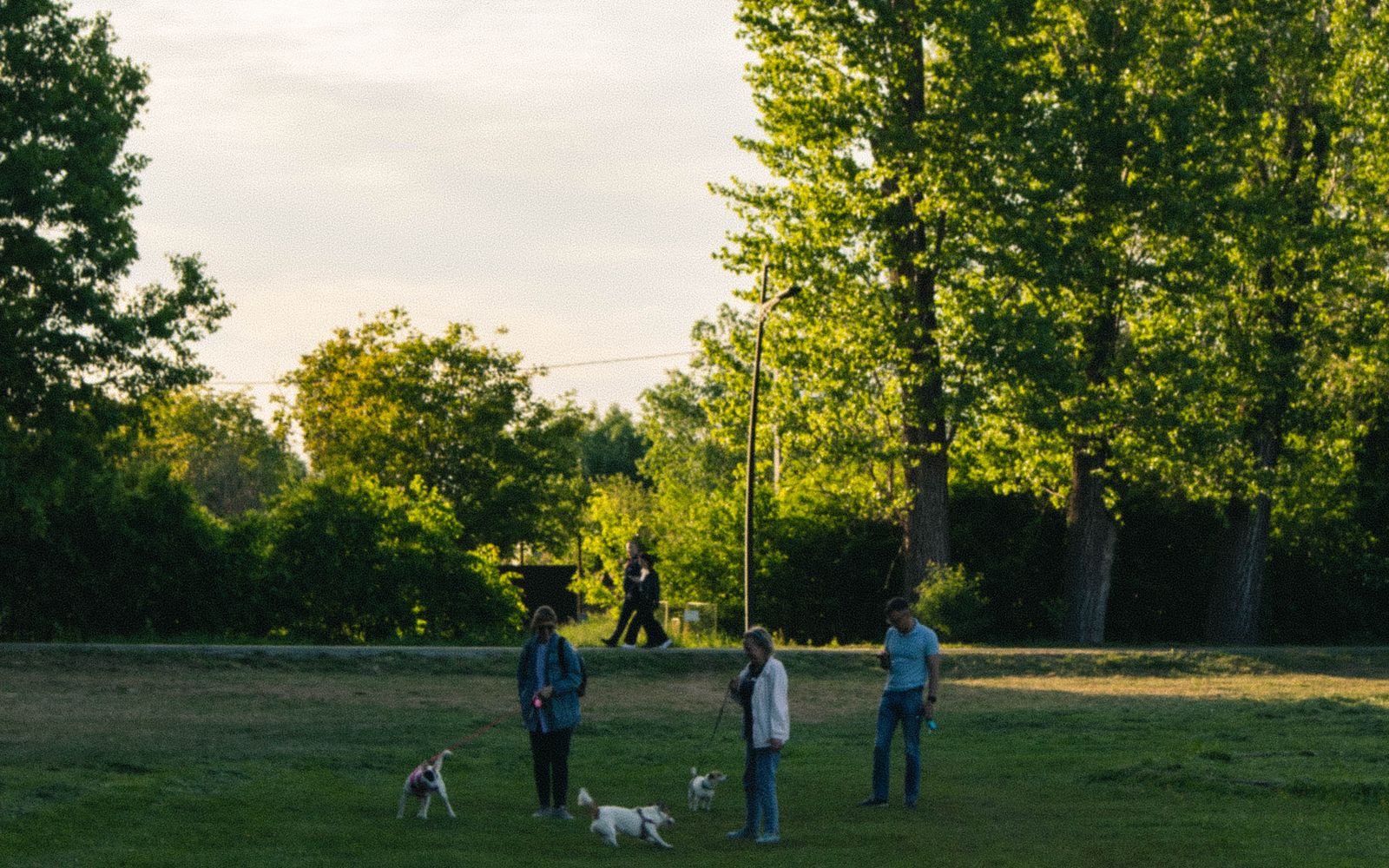
The gate at my local dog park has a double latch, the kind that keeps escape artists honest, and on a good morning I still fumble with it while my dog presses his nose into the gap. Inside, a dozen strangers stand in loose clusters while their dogs tear across the grass. The cast is stable: a greyhound who treats every morning like a race he is about to win, and a corgi who supervises. Nobody is in charge. There are no posted rules beyond the usual municipal warnings, no staff, no cameras. By any reasonable accounting this should be a disaster: an unmanaged patch of land, a bunch of animals with strong opinions, and owners who mostly don’t know each other. It works anyway. It works so reliably that nobody stops to be surprised, and that is the thing I keep coming back to.
The commons problem
In 1968 the ecologist Garrett Hardin published “The Tragedy of the Commons” in the journal Science. His argument was simple and it became the default way educated people think about anything shared. Picture a pasture open to all herders. Each herder gains the full benefit of adding another cow and pays only a fraction of the cost of the grass it eats, so each adds cows, and the pasture dies. Freedom in a commons, Hardin wrote, brings ruin to all. The only escapes he saw were privatization or state control.
The dog park is a pasture, fenced and open to all, and it does not collapse. Neither, it turns out, do most real commons. Elinor Ostrom won the Nobel Prize in economics for studying the ones that survive, and Michelle Nijhuis’s Aeon essay on her work is the best short account of it I have read. Ostrom found that functioning commons share the same features, again and again: clear boundaries, users who see each other’s faces, rules the users themselves can change, and cheap ways to catch a cheater. The dog park has all of these. It just never writes any of them down.
Hardin’s herders were abstractions who never talked to one another. Ostrom’s were people who did: irrigators who met at the sluice, fishers who knew each other’s boats. That is the whole difference. A commons works when the users can see one another, talk cheaply, and keep an eye on things without a clipboard. The dog park has all three, so completely that the system runs itself.
The rules nobody wrote
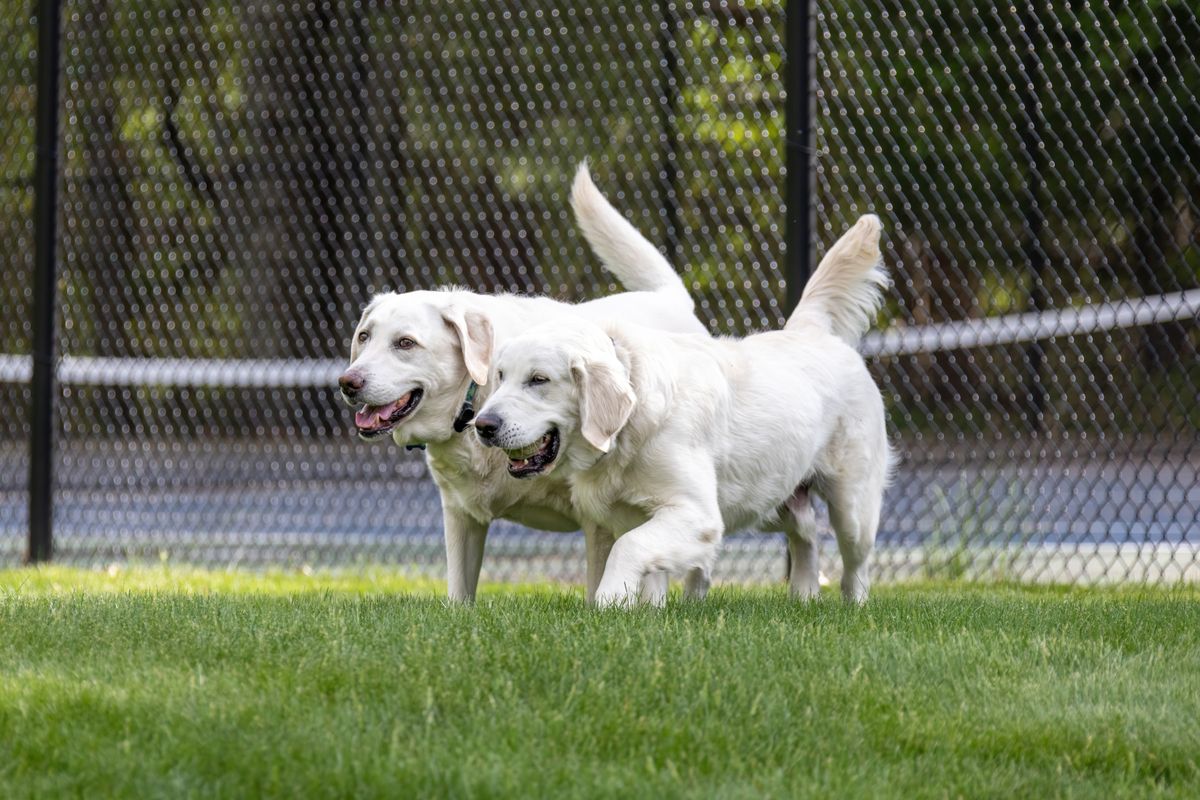
There is a code inside the fence, and everyone in it knows it, though nobody could recite it. You leash at the gate, both latches. You pick up what your dog leaves, every time, in front of witnesses. You don’t bring food, because food turns ten friendly dogs into a negotiation. You keep the puppy on the small-dog side until it is big enough to matter. You watch your dog, actually watch, and not your phone. And you know, without anyone ever saying it, that the owner who shouts “he’s friendly!” while their dog charges is the one whose dog is not.
We have written about how gaming communities forge their own moral logic out of unwritten rules, and the dog park is the same code translated for dogs. What is interesting is that the code has no enforcer. There is no referee, no complaints desk, no fine. The sanctions are a look, a sigh, a pointed comment that lands like a gavel. This is, in the technical language of the people who study commons, a system of graduated sanctions. The first offense gets the look. The second gets the remark. The third gets the silence, which is the worst one, because the park is a small world and everyone in it knows everyone else’s dog. Nobody has to escalate beyond that very often. The rules hold because everyone inside the fence has something to lose, and because the punishment for breaking them is not a ticket. It is becoming the person everyone watches.
Who does the enforcing
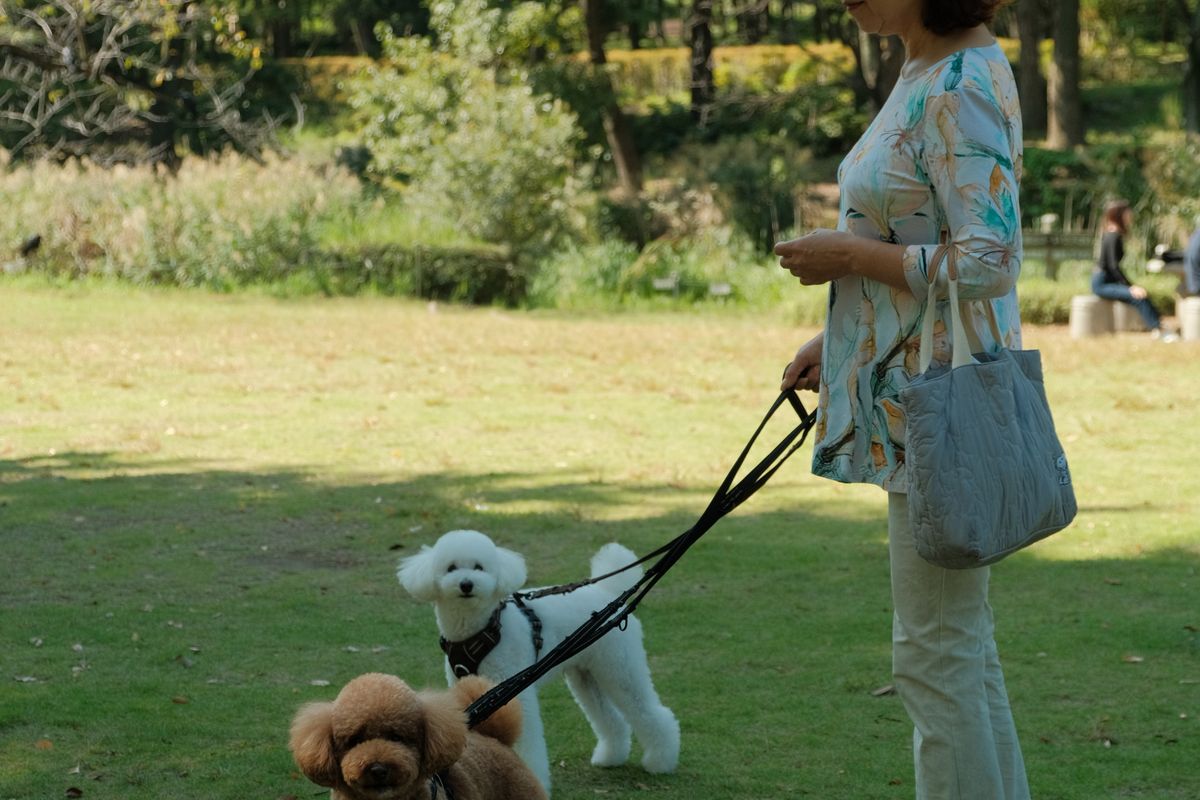
The enforcement is worth looking at closely, because almost all of it is unpaid moral labor. The woman who picks up after a stranger’s dog because the stranger walked away. The man who quietly stands between a lunging dog and a child. The regulars who decide, together, that a certain owner is not welcome anymore, and make the park inhospitable in the quiet way that regulars have. Nobody pays them. Nobody thanks them. The park simply keeps working, and the work is invisible, which is why it looks effortless.
The psychologist Linda R. Tropp writes about what she calls psychological generosity, the small deliberate acts of attention we can give strangers in public spaces. A smile, a held door, a moment of eye contact. The dog park runs on the canine edition of this. We have also written about the curious ethics of confiding in strangers you will never see again. The dog park is the reverse case: people you will keep seeing for years, without ever learning their last names. We know each other as Rusty’s dad and the corgi’s person. The conversation is the weather and the dogs, and it is enough. Most of us get more unforced human contact in an hour at the fence than in a week of working from home, and we get it from people we would never otherwise meet.
There is a rhythm to the morning shift. The first regulars arrive before the dew dries, and they nod, and they watch the gate for newcomers. Newcomers get the benefit of the doubt, briefly. The regulars are the monitoring system Ostrom wrote about, except they would never describe themselves that way. They are just people who show up, and the showing up is the whole job.
What breaks it
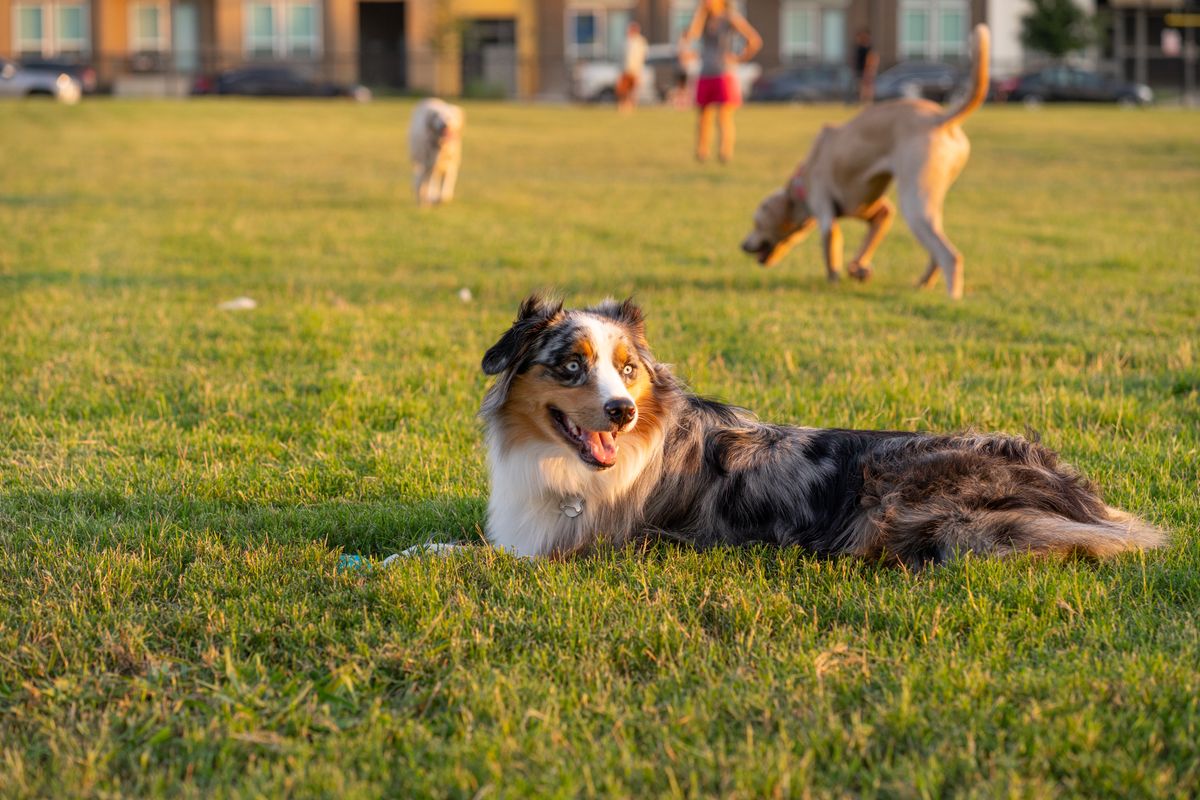
The commons is fragile, and anyone who has been to a bad dog park knows it. One owner who will not leash an aggressive dog. One person who decides the grass is someone else’s problem. It tips fast, because trust is not destroyed by the same arithmetic that builds it. A single incident rewrites the risk calculation for everyone, and the regulars drift away. What is left is the park that gives commons a bad name: empty grass, a gate that swings, a sign listing fines nobody will ever pay.
The interesting part is what happens next. We don’t usually try to fix the commons. We privatize it. The response to the ruined park is the membership dog run, the app that books you a slot of fenced grass, the club with rules you can enforce by banning people instead of by looking at them. There is nothing wrong with any of that, and it is still a retreat. We have written about the queue as a moral technology, a machine for fairness built out of visible order. The private dog run is the same instinct in reverse: so convinced the commons can’t work that we pay to rebuild it behind a paywall.
What the private run cannot sell you is the mix. Membership sorts people by income and zip code, and a park full of people who already agree with each other is not a commons, it is a club. The thing the public park has, and the thing worth defending, is that it is full of people you did not choose. That is exactly what makes it work.
The gate again, on the way out. You leash your dog, you nod at the strangers you will see tomorrow, and you walk back into the world of private property, where the rules are printed and enforced by people whose job it is. The park is the opposite arrangement, and it holds. Not because people are good, exactly. Because they are watching each other, and because the thing they share is worth the small effort of keeping it. The dogs understood this before we did. They treat the park as a commons every single morning, and they have never heard of Garrett Hardin.