
The Velvet Rope: What Gatekeeping Actually Protects
The club has a rope, and the rope has a person holding it. On a Saturday night the bouncer stands behind the velvet with a small list, and the groups drift up to him in waves. Some names get a nod and the rope unhooks. Other groups get the shrug that means wait or the shake that means no, and what surprises me is how quietly the rejected ones take it. Nobody argues with the rope, and the rope does not explain itself. That is part of the point: at the door, you are either on the list or you are not.
The same week, on my phone, someone is being told they are not a real fan of a band they have seen nine times, and the reply is the standard one. “Stop gatekeeping.” I have typed that sentence myself. I would have typed it at the bouncer too, if I thought it would help. Gatekeeping has become a slur, the word you throw at anyone who acts like belonging to something can be earned or denied. And here is the thing I keep turning over: the velvet rope outside the club is the same act as the fan telling the newcomer to go listen to the back catalog first. Both are someone deciding who counts. One of them I accept without a word. The other makes me angry. This essay is about why, and whether the difference is real or just a matter of which side of the rope I am standing on.
The word had a job before it had a bad name
Gatekeeping is not originally a fandom insult. It is a piece of social science from the 1940s, and its first job was boring and wholesome. The psychologist Kurt Lewin, studying how food reaches American families, noticed that a household’s eating habits were not decided by the family so much as filtered by whoever did the shopping. One person stood between the store and the table, and what that person chose to buy set the range of what anyone could eat. Lewin called that person a gatekeeper. A decade later, the journalism researcher David Manning White followed a newspaper wire editor through his workday and published the study as “The ‘Gate Keeper’: A Case Study in the Selection of News.” The editor, called Mr. Gates, threw away nine tenths of the wire copy that crossed his desk. The word stuck to media for the rest of the century, where it described something ordinary: an editor with more input than attention, choosing for everyone else. Wikipedia’s history of the concept is a decent place to start if you want the full arc.
Then the internet arrived, everyone got a desk, and the word migrated from newsrooms to fan communities, where it stopped describing an editor and started describing an accusation. That migration is the interesting part. We did not stop having gatekeepers. We stopped liking the ones we could see.
The door protects the room
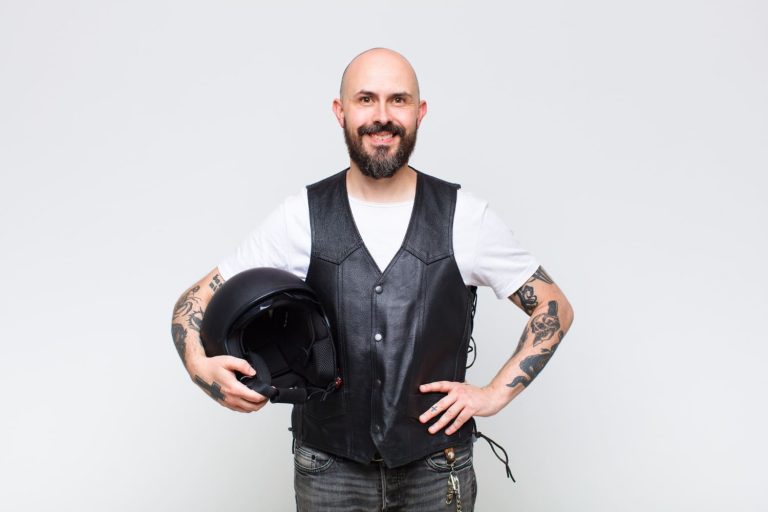
I understand the case for doors better than I used to, because I have spent time inside rooms that have them. Motorcycle clubs are the clearest example. The kutte, the vest a rider wears with the club’s patches on the back, is not something you buy. We wrote about the kutte as a sacred garment: each patch records a chapter, an achievement, a piece of the member’s history with the club, and the back patch, the big one with the club’s name, is not sold anywhere. It is granted. A stranger cannot walk into a shop and buy that name, and the club enforces the boundary with a seriousness that looks absurd from outside and entirely reasonable from inside. The patch means something precisely because not everyone can have one. If the vest were for sale, it would be a costume. The door is what keeps it a garment.
Gaming guilds run on the same logic, minus the leather. The raid group I ran with for years had no written admissions policy, but it had a real one: you showed up on time, you prepared, you did not waste thirty-nine other people’s evenings because you could not be bothered to read the fight. Every long-lived guild has an unwritten code like this, and the code does the vetting that no written policy could. New people joined all the time, but the door opened for people who had demonstrated something. Trust in a raid is not a feeling. It is a track record. Nobody calls that gatekeeping when it is a surgery residency or a pilot’s license. We call it standards, and we are glad the surgeon on the other side of the door met them. The word only turns ugly when the room is a hobby, something we believe should be available to everyone, because it costs nothing and hurts nobody. Except that it does cost something. It costs the thing that makes the room a room: the shared understanding that the people inside have paid attention, and that being inside means something.
This is the part I have to keep reminding myself of, because it is unfashionable. Belonging is only worth anything if it excludes something. A club that lets in everyone is not a club, it is a waiting room. The value of being inside is partly the knowledge that the door exists and that you are on the right side of it. What feels like cruelty from outside, the bouncer’s shrug, the guild’s silent vetting, the fan’s insistence that you learn the difference between the albums, is often just the room defending the thing that makes it worth being in.

Why the word became an insult
So why does the word sting? Partly because the people who do the excluding are often not defending meaning. They are defending their place in line. There is a specific kind of fan who discovered a band or a game or a scene early, and for whom every new arrival feels like a devaluation of their own discovery, and they reach for standards the way a miser reaches for a lockbox. The criteria are real but the motive is status, and everyone standing outside can smell it. When gatekeeping is really a performance of having arrived first, it deserves the contempt the word carries.
But there is a second, stranger reason the word turned. We handed the doors to machines. The recommendation engine is now the most powerful gatekeeper in culture, deciding what millions of people will see, hear, and learn exists at all, and it answers to no community and no standard. We wrote about how recommendation engines became moral gatekeepers, quietly replacing editors and tastemakers with engagement scores. And we hate that arrangement too, because the machine cannot tell us why we were let in or kept out. The old human gatekeeper could at least be argued with, or waited out, or charmed. The algorithm accepts no charm. So we are in a strange position: we resent the human being at the door for judging us, and we resent the machine that replaced them for not judging us as a person at all.
Psychologists have studied how we perceive the human version, and the data matches the split. A 2025 study in the Journal of Personality and Social Psychology ran six preregistered experiments on what people think of community gatekeepers, the members who decide who gets in. The consistent finding: people who exclude outsiders are judged less likable than people who welcome everyone, but they are also judged more committed to the values the group stands for. The harsher the mismatch between the outsider’s values and the group’s, the more the exclusion reads as loyalty rather than cruelty, and the more willing insiders are to put such people in charge. Both judgments are real. We dislike the gatekeeper socially and we trust them morally, and the same act produces both reactions. That is not hypocrisy on our part. It is the accurate experience of standing at a door: from outside it is rejection, from inside it is protection.

The difference between a door and a wall
None of this tells you when to keep the rope and when to cut it. But I think there are three honest questions that separate a door from a wall, and they work whether the room is a club, a guild, a fan community, or a profession.
First: can the criteria be said out loud? A door has an answer to the question “what is this for?” The bouncer’s list exists for a reason, the guild wants people who show up, the club wants members who will represent the patch. A wall has no answer, or an answer that moves. The test is simple: if you ask what it takes to get in and the answer changes every time you ask, you are not at a door, you are at a wall, and the person on the other side is enjoying the asking.
Second: what is being protected? Doors protect meaning, competence, or safety. Walls protect the status of the people already inside. A door is afraid of dilution, of the room becoming meaningless because anyone can wander in. A wall is afraid of replacement, of newcomers who might be better, and it defends itself with purity tests and hazing and the endless rediscovery of reasons why the new person is not quite right. The same rule, “you have to earn it,” can be a door in one community and a wall in another, and the only way to tell is to watch whether the criteria apply to everyone or keep shape-shifting around the people who are already in.
Third: does the door swing inward? Communities that stay alive keep their gates facing outward, toward the people who might join. The moment the gate turns inward, toward the members themselves, the community starts eating itself. We watched this happen to a whole Discord server once: the rules ate the community, one careful regulation at a time, until nobody felt like talking. Doors become walls the same way, one justified exclusion at a time, until the room is defending itself from the people already inside it. The sign is when long-time members start getting turned away for small offenses against an unwritten etiquette that nobody can quite recite. A door faces out. A wall faces in.
How to live with the rope
I have been on both sides of enough doors to have stopped pretending I am above any of it. I have been the newcomer turned away, and I have been the regular who quietly hoped the new people would not come back. I have typed “stop gatekeeping” and I have thought, in a weaker moment, that some people simply do not get it. Both positions felt completely justified at the time. That is the thing about doors: they always feel different depending on which side you are on, and no amount of principle fully corrects for that.
Here is what I have landed on. Keep the doors that protect meaning, and make their criteria as public as you can, because a door you can name is a door you can choose to walk through or walk away from. Cut the walls, especially your own, the ones that exist to make you feel like an insider. And when you find yourself outside a room that matters to you, ask the three questions before you rage at the rope. If the door is protecting something real, either earn your way through it or go build your own room; both are honorable, and both have been how every good community ever got started. If it is a wall, do not waste your anger on it. Walls fall on their own eventually, because a room that exists only to keep people out does not have anything inside worth protecting.
The rope never hurt anyone. The person holding it decides whether it is a door or a wall, and that decision, made quietly in a thousand small rooms every day, might be the most common ethical act there is.