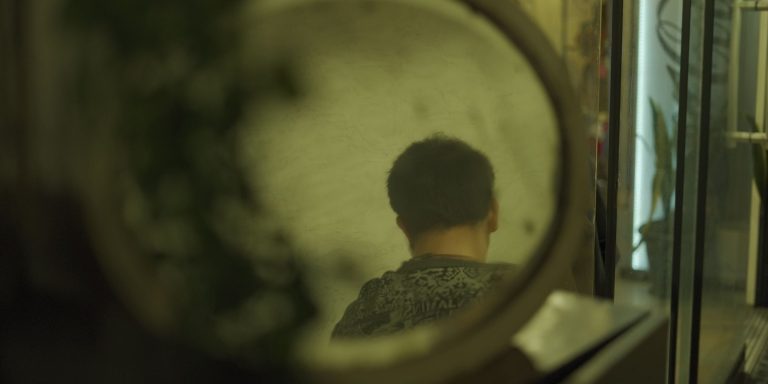
The Right to Look Away: On Moral Attention, Burnout, and When It’s Okay to Not Care
I spent a month last year trying to keep up. Every morning I would wake up, open my phone, and try to absorb everything that had happened while I was asleep. A humanitarian crisis in one country. A political scandal in another. A school shooting. A climate report. An AI development that might change everything. A new variant. A protest. A court ruling. A data breach. A famine.
By the end of the month, I was not more informed. I was just more tired. And I had not done anything useful about any of it.
This is not a confession. It is a question a lot of us are living with now: what do we owe each other, morally speaking, in terms of attention? Is there an obligation to stay informed? To bear witness? To feel the right amount of distress about the right things? And what happens when the volume of demands exceeds your capacity to respond?

The duty to know
The idea that we have a moral obligation to be informed predates the internet by centuries. Kant argued that enlightenment required the courage to use your own reason — no delegating your understanding to authorities. Ignorance, for him, was a kind of moral failure.
I think there is something to this. The person who posts “why is nobody talking about X” while having spent zero minutes learning about X is not contributing. The person who scrolls past a humanitarian crisis because it does not fit their emotional bandwidth is, in a real sense, failing to treat distant strangers as morally relevant. How we spend our attention reveals what we actually value.
But the strongest version of this argument collapses under its own weight.
The paradox of the informed
Here is the problem: the amount of information a responsible person would need to absorb in 2026 to be adequately informed is infinite. There is always another crisis. Another report. Another perspective. Another atrocity you have not yet processed.
The people I know who follow the news most closely are not the people who are most effective at making change. They are the most exhausted. They can recite the details of five ongoing conflicts and three environmental tipping points. But they have not called their representatives. They have not donated. They have not volunteered. They just absorb, endlessly, waiting for a response that never comes.
This is a structural problem. Attention is finite and the world’s demand for it is infinite. No amount of discipline can close that gap.
The political scientist Robert Putnam noticed something similar back in the 1990s. The people who were most informed about public affairs were also the most anxious. Knowledge did not empower them. It overwhelmed them. They knew too much to act, because every possible action seemed insufficient given the scale.

The ethics of limited bandwidth
The philosopher Susan Wolf wrote about something she called the “moral saint” problem. The ideal of moral perfection — dedicating every waking moment to doing good — is not actually an appealing ideal. A life spent entirely on obligations leaves no room for the things that make life worth living: hobbies, friendships, art, play, idle conversation. The moral saint would be admirable, Wolf argued, but not someone you would want to have coffee with.
Something similar is happening with our expectations around attention. We have created a cultural ideal of the informed citizen who tracks every major issue and feels the appropriate amount of concern about everything. But this ideal, pursued seriously, is incompatible with a functional life. You cannot work, raise kids, maintain friendships, exercise, sleep, and also absorb the daily firehose of global suffering. Something has to give.
The philosopher Bernard Williams wrote about the problem of “one thought too many” — the idea that some moral considerations, while valid, can damage the relationships that make life meaningful. If you are helping a friend move and pause to calculate whether this is the most efficient allocation of your altruistic efforts, you have missed the point of friendship. The same logic applies to attention. If you are watching the news instead of having dinner with your family because you feel morally obligated, you have made a calculation that may be correct in the abstract but damaging in practice.

What we actually owe each other
I do not think the answer is that we owe nothing. The complete refusal to pay attention is a kind of withdrawal from the shared project of living together on this planet. But I also do not think we owe everything.
What we owe each other is more specific.
First, we owe each other the willingness to be wrong. The worst failure of attention is the refusal to update. The person who has made up their mind about a complex issue and will not engage with new information is committing a moral failure, regardless of whether their original position was right. Attention is not about volume. It is about responsiveness.
Second, we owe each other scope honesty. No one can track everything. The responsible thing is not to pretend you do. It is to be clear about what you follow and what you do not, what you know and what you are guessing at. The damage comes when people opine confidently about things they have spent five minutes reading about, not when they say “I have not followed this closely enough to have an opinion.”
Third, we owe each other attention to the people right in front of us. There is a peculiar phenomenon of our era where someone can be deeply concerned about the welfare of distant strangers while being dismissive with the people in their actual lives. The ethics of attention should start local. If you cannot be present for your coworker, your partner, your neighbor, your attention to distant crises is not virtue. It is a performance.

The case for strategic ignorance
Psychologists call it compassion fatigue — the emotional numbing that happens when people are exposed to repeated requests for empathy. The term came from healthcare workers, but it applies to anyone whose attention is constantly demanded by suffering.
I have come to believe that strategic ignorance — the deliberate choice not to know about certain things — is a survival strategy, not a moral failure. You cannot care about everything. Trying will burn you out until you care about nothing. The sustainable approach is to choose a few things to care about deeply and let the rest exist outside your attention. Not because you do not care. Because you know your limits.
This feels uncomfortable to say out loud. It sounds like an excuse. But it is more honest than pretending you can keep up and quietly drowning.
What changes when you stop trying
I stopped trying to follow the news daily about six months ago. Not completely — I still read deeply about the things I care about most. But I stopped the morning scroll. Stopped the push notifications. Stopped the reflexive click on every breaking story.
Nothing bad happened. I read books instead of headlines. I followed people who study one thing deeply instead of people who comment on everything shallowly. I had more attention for the people in my life and less for the strangers on my screen.
I am not saying this is the right choice for everyone. But it is a choice, and it is an ethical one. Where you direct your attention is what kind of person you are. The mistake is believing attention is not a choice at all — that you are simply a passive receiver of the world’s demands.

The bottom line
The ethics of attention is not about how much you know. It is about the relationship between what you know and what you do. The person who knows everything and does nothing has fulfilled any moral obligation. The person who knows a few things well and acts on them has.
The right to look away is not a right to be callous. It is the recognition that attention is finite, that obligation must be bounded, and that a good life is not measured by the volume of suffering you can hold in your head. It is measured by what you do with what you choose to carry.
I still do not know exactly where the line is. But I do know one thing: lying on the floor at 10am, paralyzed by the accumulated weight of a world I cannot fix, is not a moral achievement. It is a signal that I have failed to respect my own limits. And learning to respect those limits — to look away when necessary, to choose what to carry carefully — might be the most important ethical skill we have not yet learned to name.