
The Price of a Clean Conscience: On Moral Licensing and the Ethics of Feeling Good About Yourself
I spent a morning last month sorting my recycling into the right bins. Glass here, plastic there, cardboard flattened, lids removed. Felt great. An hour later I bought something I didn’t need in packaging I knew was wasteful, and I barely thought twice about it.
That is moral licensing in miniature. The good deed gave me permission for the bad one. I had earned it.
The term comes from social psychology, specifically a 2001 study by Monin and Miller. They found that people who got to express a non-prejudiced view were later more likely to express a prejudiced one. They had established their virtue. The balance was settled. They could afford a lapse.
The phenomenon is everywhere once you start looking. And it raises an uncomfortable question: is feeling like a good person actually making us worse?
The Mechanism
Moral licensing works because our moral self-image operates like a bank account. Every virtuous act makes a deposit. Every transgression makes a withdrawal. But the accounting is personal and the interest rates are made up.
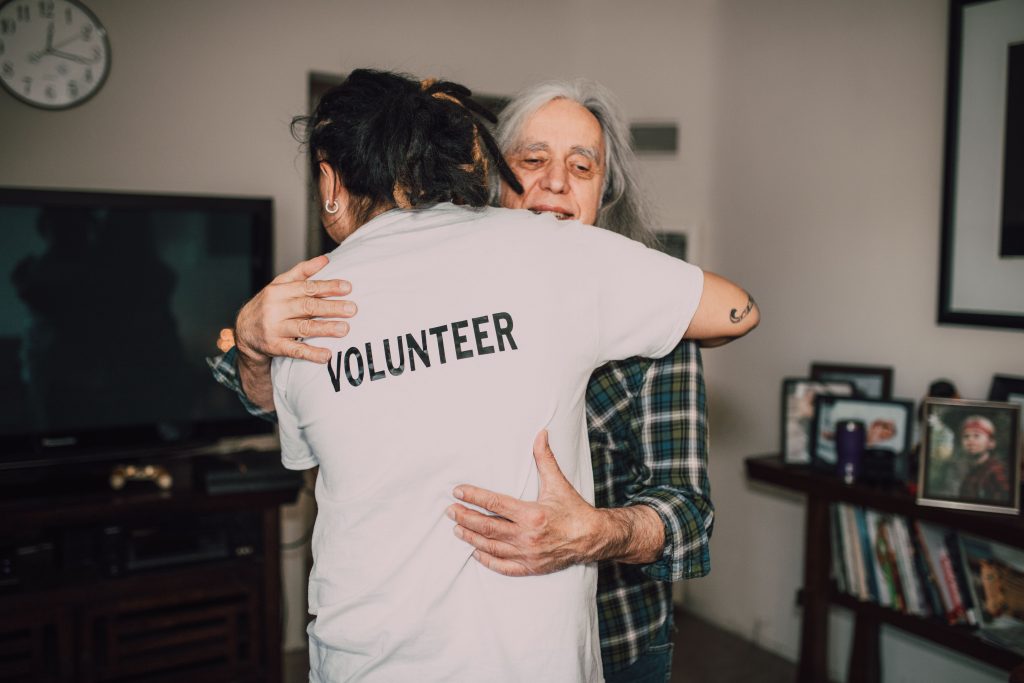
Buy the expensive organic kale and you have deposited enough moral capital to justify the plastic-wrapped takeout later. Volunteer at the food bank on Saturday and you have earned the right to snap at your partner on Sunday. Sign a petition, share a post, attend a rally. The credit accumulates. Eventually it gets spent.
The problem is not that people are hypocrites. It is that the accounting is invisible even to the person doing it. You do not feel yourself sliding. You just feel like a good person who sometimes does things that do not quite match. And that feeling of goodness is exactly what makes the next lapse easier.

The Predictable Patterns
Some of the most well documented cases of moral licensing come from hiring and evaluation. One study found that hiring managers who had expressed support for diversity initiatives were subsequently more likely to favor a white male candidate over an equally qualified woman or minority candidate. They had demonstrated their virtue. The proof was on the record. Now they could hire whoever they wanted without feeling biased.
The same pattern appears in environmental behavior. People who were given a basket of energy-efficient lightbulbs, a visible gesture of green commitment, subsequently used more energy overall than the control group. The symbolism of doing good replaced the reality of it.
In charitable giving, people who publicly pledged to donate were less likely to actually donate than those who kept their intentions private. The public commitment satisfied the moral need. The actual donation became optional.
None of this is conscious. People rarely think “I was virtuous just now, so I can be bad.” They just feel like they have done their part. The impulse toward goodness is satisfied. The motivational pressure releases.
The Ethical Problem
If moral licensing is real, and the evidence is strong enough that it is now a standard finding in behavioral ethics, then it creates a problem that goes beyond individual hypocrisy.
The structure of modern moral life is built on visible gestures. Sign the petition. Share the infographic. Add the frame to your profile picture. Attend the march. Post the statement. These acts are not empty, but they are dangerously satisfying. They give us the feeling of having done something without requiring us to change anything structural about our lives.
This is where the phenomenon connects to the broader dynamics I wrote about in “The Right to Look Away”. The permission we grant ourselves to stop caring, to put the phone down and move on, is partly enabled by the memory of the times we did care. We looked. We acknowledged. We are good people. We can stop now.
The same logic powers how institutions handle moral obligations. A company announces a diversity initiative, publishes a sustainability report, makes a high-profile donation. These things are real in one sense. But they also function as moral licenses that let the organization continue business as usual while pointing to the evidence of its virtue.
In “Justice vs Equity”, I explored how public institutions often use symbolic gestures of fairness to avoid substantive redistribution. Moral licensing is the psychological gear that makes that work.
What Do We Do?
I do not have a clean answer. That is partly the point. If feeling good about being good is precisely what enables us to be worse, then the traditional strategies for encouraging virtue, like praise, recognition, and visible certification, might be counterproductive.
Social psychologist Sonya Sachdeva and her colleagues have suggested that the best antidote to moral licensing is to focus on behavior rather than identity. Do not think of yourself as a good person who does good things. Think of yourself as a person who has a specific behavior to maintain. The shift from identity (“I am an environmentalist”) to action (“I have a target of reducing my plastic waste by half”) removes the credit-accumulation structure.
Another approach is to make the accounting visible. If you track your virtuous acts and their follow-ups in the same ledger, the licensing effect weakens. This is the logic behind commitment contracts and pre-pledges. You lock yourself into future behavior before the current virtue has a chance to spend itself.
But I am suspicious of too much solutionism here. Moral licensing might not be a bug in our psychology at all. It might be a feature. It is what allows us to function without constant guilt. We cannot sustain peak moral awareness at all times, and the licensing mechanism is how we take a break without losing our sense of self entirely.
The question is not how to eliminate it. It is how to design our lives so the lapses do not compound.
The Uncomfortable Takeaway
Here is the part I keep coming back to. If moral licensing is real, then the most comfortable forms of moral action, the ones that make you feel best while demanding the least, are probably the most dangerous. The virtue signal is not harmless. It is a drain on the limited resource of moral motivation. Every time you perform goodness for the feeling of it, you spend some of the energy that might have gone into actual change.
This does not mean performative acts are always bad. They can build social norms, shift Overton windows, signal to others that a cause is legitimate. But the net moral effect depends on what happens next. If the profile frame leads to a donation, that is one thing. If it replaces the donation, that is another.
I wrote about attention as a moral act in the piece on the right to look away. This feels like the next layer of that problem. Attention is not just about where you point your eyes. It is about what you let yourself feel after you have looked.
The people who actually change things, the ones who do the slow, unglamorous, unrewarded work, tend to have one thing in common. They do not think of themselves as having earned a break. Not because they are saints. Because they stopped keeping score.
This dynamic is related to what philosopher Justin Tosi and psychologist Brandon Warmke call “moral grandstanding” — using public moral talk to boost one’s own status rather than to achieve genuine ethical goals. You can read more about this in their Aeon essay on moral grandstanding. The line between signaling virtue and actually being virtuous is thinner than we like to admit.
Further reading: Monin, B., & Miller, D. T. (2001). “Moral credentials and the expression of prejudice.” Journal of Personality and Social Psychology, 81(1), 33-43. For a broader treatment, see Merritt, A. C., Effron, D. A., & Monin, B. (2010). “Moral self-licensing: When being good frees us to be bad.” Social and Personality Psychology Compass, 4(5), 344-357.